
After 500 Rejections, I Started Building a Product People Actually Use



Original Article Title: Mistakes to avoid while building in consumer crypto
Original Article Author: @rishotics
Translation: Peggy, BlockBeats
Editor's Note: In the crypto industry, the debate about "whether to build infrastructure" and "whether technical complexity equals a competitive moat" has never stopped. However, this article provides a reverse sample from a frontline entrepreneur: from continuous infrastructure bets failure to turning to consumer-grade products that people are willing to use and pay for, the author retrospectively examines the real difficulty of "building a product" in the crypto industry.
Compared to technical complexity and grand narratives, the article focuses more on users, distribution, and execution details. In the consumer-grade crypto field, value is not "proved" but "used out."
The following is the original article:
As a first-time founder, I once devoted several years to three infrastructure protocols, but they all eventually failed. By 2025, I started to build a consumer-grade product that people are genuinely willing to use. This content shares my experience in user growth and fundraising after "falling into pitfalls."
I have been in this industry for about 4 years.
In 2023, I started a venture in the EVM ecosystem, when "account abstraction" was the hottest concept. Almost everyone was developing wallets SDK around account abstraction. At the same time, the Rollup ecosystem was rapidly heating up. Optimism, Arbitrum, and various RaaS projects were in the mainstream.
As a math enthusiast, I was deeply attracted to ZK, believing it would change the world (I still believe it will eventually).
One core mistake I made at the time was equating "complexity" with "credibility."
When VCs asked me about use cases, I would confidently list directions like zkML, zk identity, zk voting — and in fact, until today, these things have hardly been used. I mistook "the technology looks very impressive" for "this is a useful product."
Over time, I even started to believe: the more complex the idea, the higher the probability of entrepreneurial success.
Many investors also told me that in the crypto industry, only by building infrastructure can one have a chance of success. It wasn't until nearly two years later, after more than 500 rejections, that I realized: this path was not right for me.
So, I entered the Solana ecosystem.
For me, this was a whole new world. People here care about real-world use cases. Even if it's a meme, revenue matters. Speed matters. Distribution matters. (Also, a special thanks to @superteamin for the assistance along the way.)
So far, we've been building consumer-facing applications in this ecosystem for almost 7 months now. During the alpha phase, we've processed over $12 million in transaction volume. Here are some of the insights I've gathered:
1. Build for a Younger Audience Willing to Try New Things
Design the product with a demographic that is inherently more open to new offerings.
In consumer-facing crypto products, this often means "trenchers" or younger users, many of whom fall within the 13–21 age range.
A 2024 study by the Consumer Technology Association (CTA) on the Z Generation (ages 11–26) found that 86% of Gen Z say tech is essential to their lives, a higher share than any other older group. They adopt new tech earlier, with an average of 13 devices per household and using about 6 of them for nearly 12 hours daily.
Gen Z is also more likely to own personal technology such as crypto apps (e.g., 58% own a gaming console, significantly higher than older groups). Their willingness to consume new tech, more subscriptions, and a faster pace of change and trial outpaces millennials, Gen X, or Baby Boomers.
They are more willing to try new apps, experiment, and rapidly change habits.
In contrast, older users (often above 25) generally resist changing existing processes unless strongly incentivized. Note: this conclusion might not apply if you are building for an institutional audience.
Multiple studies also indicate significant behavioral differences: young users engage socially with more people daily, making them more likely to share "cool finds" with friends. Social messaging activity peaks around ages 20–21, often tied to college or schooling.
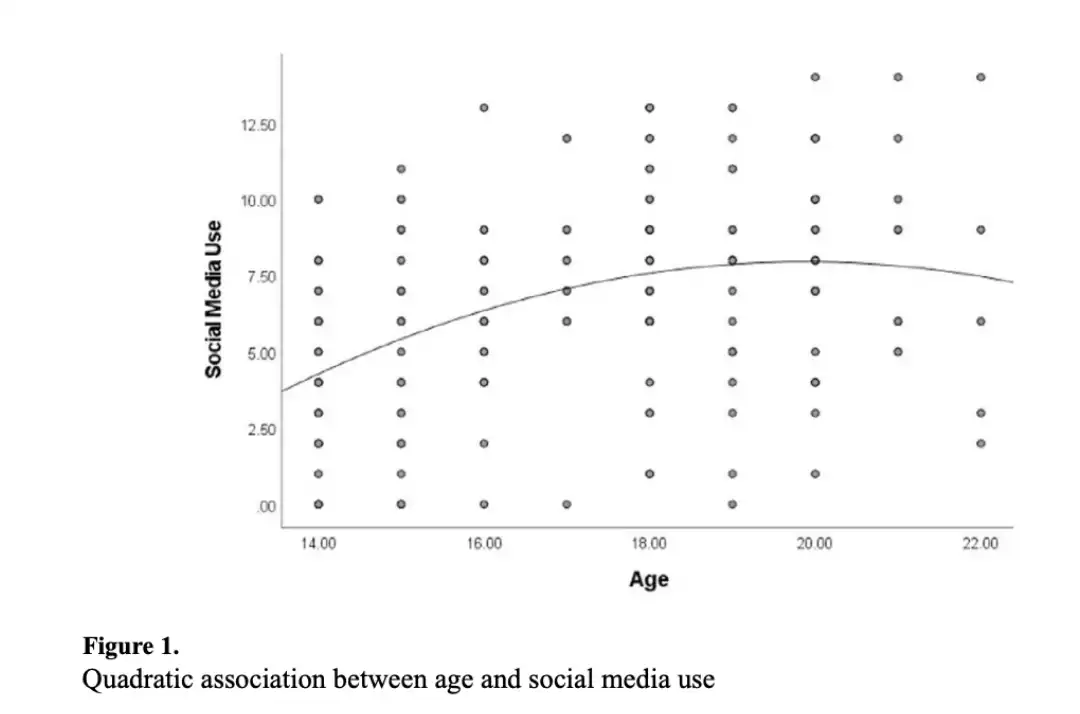
Further research provides additional evidence to support this. For example, the paper "Age-related differences in social media use, online social support, and depressive symptoms in adolescents and emerging adults" suggests that after early young adulthood, individuals' interaction rates on social media gradually decline.
This trend has brought a very direct insight: products designed for younger users naturally have stronger virality.
2. Make the Product Intrinsically Shareable to Reduce Marketing Costs
If you don't have a sufficient marketing or advertising budget, then your product itself must take on the role of the "distribution channel."
In other words, the product is the marketing, the product is the propagation.
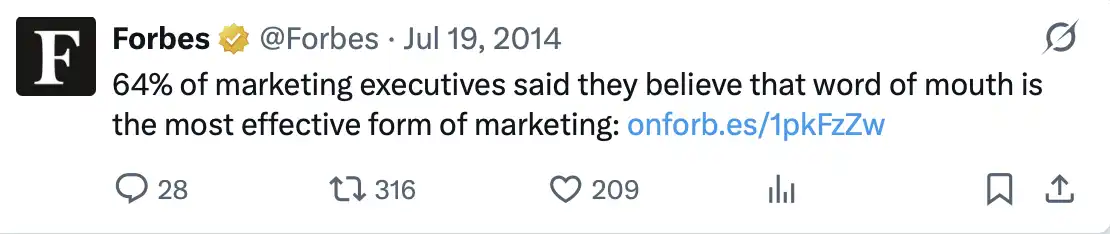
A product with high intrinsic shareability can significantly reduce marketing costs.
This is particularly important in the crypto industry because:
· KOL marketing costs are high
· User trust is generally low
· Most users expect rewards or incentive mechanisms before participating
In such an environment, relying on traditional marketing methods often yields limited results, while naturally driven propagation by the product itself is more sustainable.
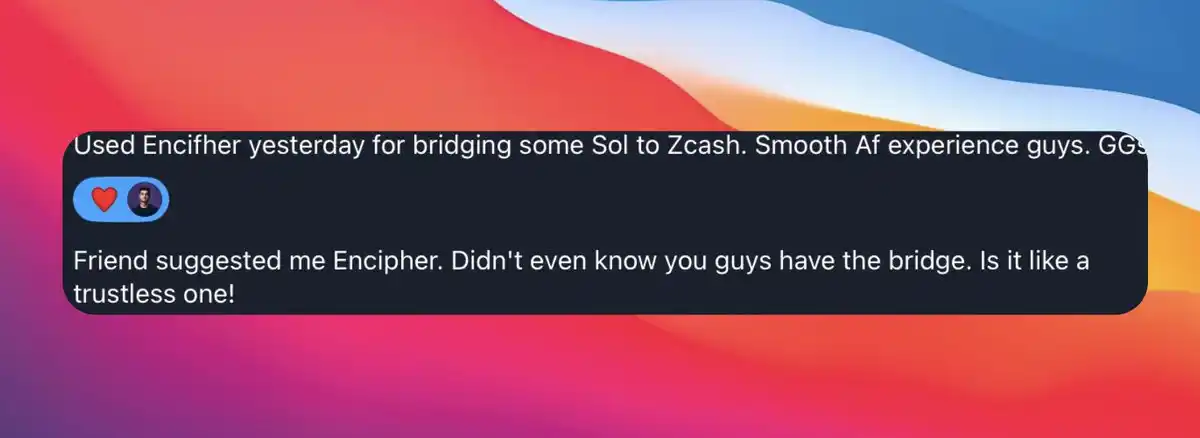
Direct Messaging (DM)
If your product can give users a spontaneous reason to share, whether to friends, groups, or communities, you can achieve distribution effects without heavy expenditure.
This is not easy to achieve in the crypto industry, but optimizing for this from day one is very worthwhile in the long run.
3. Respond to User Feedback Promptly
When users provide feedback on issues with the user experience or encounter poor interactions, be sure to fix them immediately, especially issues that directly impede the user flow.
My previous practice was to leave bug fixes until the end of the day. However, once a user DM'd me saying, "Your app doesn't have this feature yet, so I'll stick with Y for now."
At the time, I expressed understanding, but the result was that the user continued to use Y. I later DM'd several times trying to bring them back, but it was very difficult—they had already formed a habit of using Y.
Ultimately, once users have established usage habits in other products, the cost of trying to get them to switch back becomes very high.
Therefore, strive to ensure that bugs are fixed within 2–5 hours.
If multiple users repeatedly request a new feature that is very important to them and technically feasible:
· Develop and launch it within 2-3 days
· Clearly communicate that it is based on their feedback
· You can even provide some financial incentive (which may turn them into the most active advocates of your product)
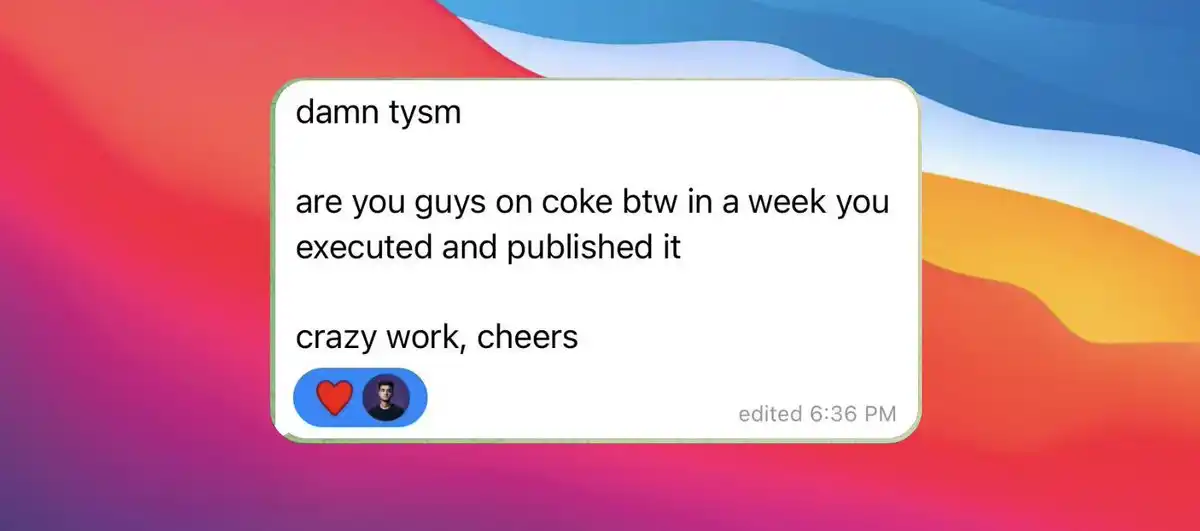
A recent user DM received from a user who requested a critical feature.
Delivering features around user needs will bring three things: directly improving the product itself, increasing user engagement, and building a deep trust relationship
When users see their feedback being taken seriously and truly translated into product features, they will start to feel that the product "has a part of them."
This emotional sense of "ownership" is extremely important in early-stage consumer products and is very powerful.
4. The Name of the App Is Very Important
This may sound basic, but many people—including myself—have made serious mistakes at this step.
Your app name must be highly memorable and easily shareable and repeatable. Otherwise, you will often receive messages like this (users wanting to recommend but unable to recall your name).
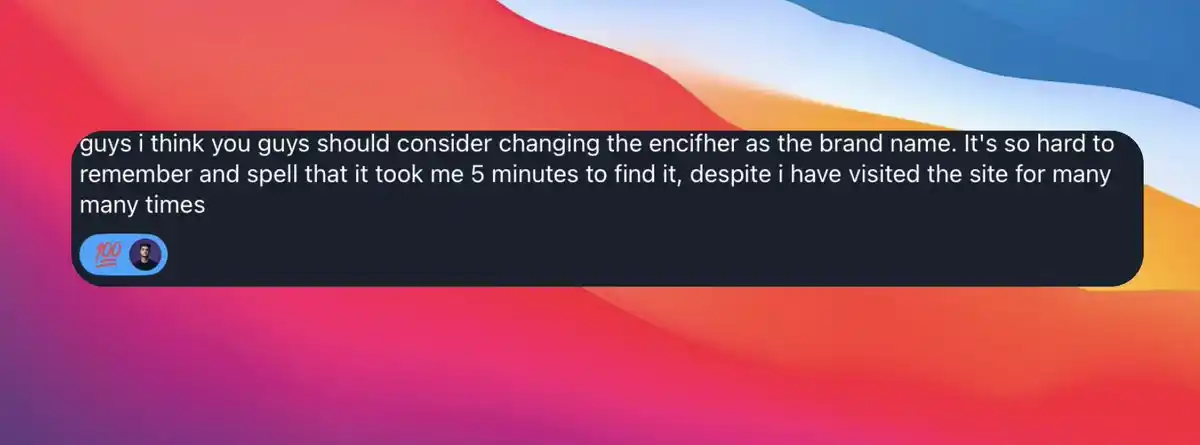
And it's true— the name "encifher" itself is very hard to remember; I can't blame the user for that.
There are even many group chats set up by investors or partners with the product name misspelled, and now looking back, it's just a wry smile.
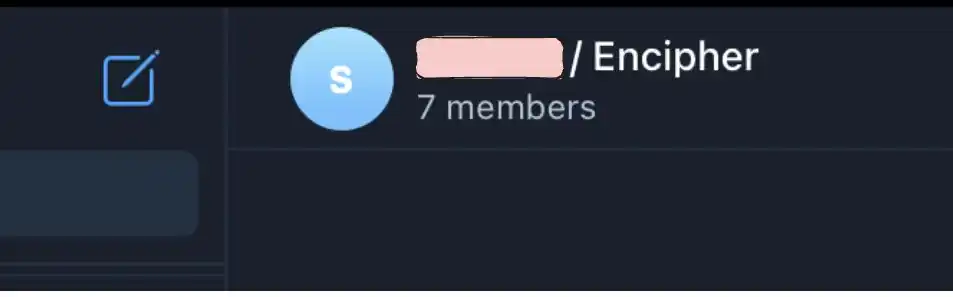
For this reason, we later changed the name to encrypt.trade.
There are actually many ready-made methods and resources online to refer to on how to choose a name that is "easy to remember and share."
5. Communicating with Users Is Difficult, but Non-negotiable
Finding users and truly engaging with them is a very challenging task, especially when your direction is not within the current mainstream narrative.
When I first started working on privacy-related products, it was not a popular track. Although many retail users had a genuine need for privacy, they were scattered and hard to find.
So I did something that most people would deliberately avoid: during the validation phase, I proactively cold-messaged nearly 1000 people.
If you're lucky, about 10 out of 100 people will reply; and among these replies, only 3–4 might provide you with genuinely useful feedback.
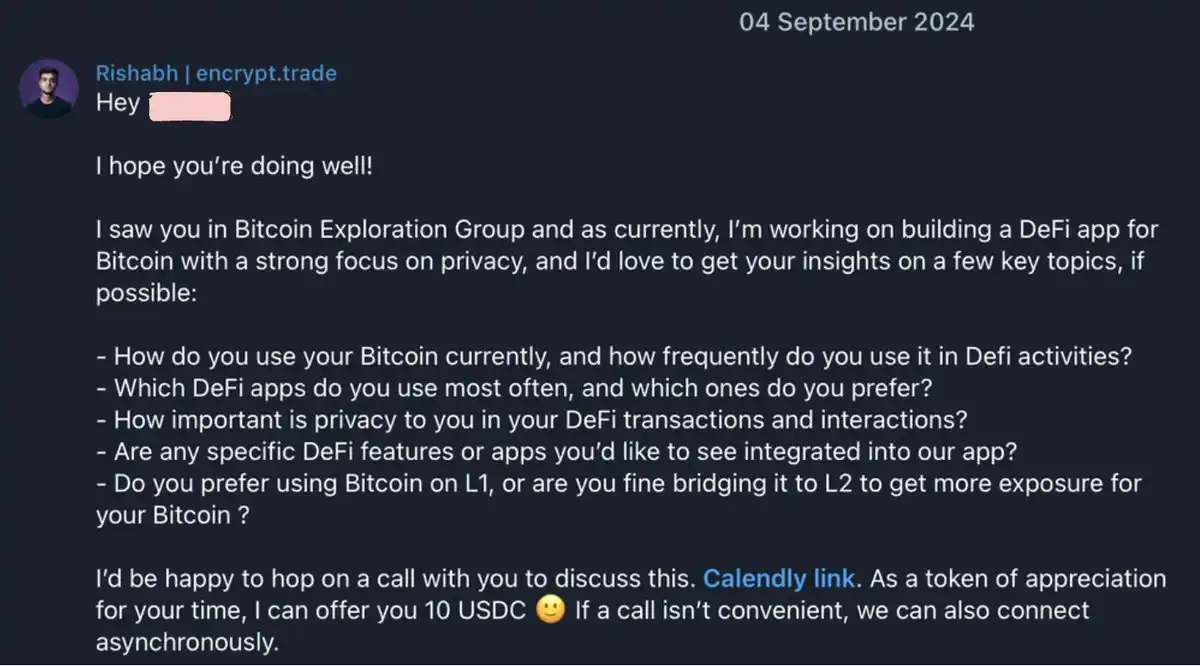
A very poor example of a cold message.
In practice, whenever anyone showed even a slight interest, I would engage in deep conversations with them, iterating on the product while communicating with users.
In fact, cold messaging itself is a process that needs constant iteration. When composing and sending cold DMs, there are several key points to keep in mind: start with a relatively "gentle" opening, put the most substantial information upfront (such as funding status, processed transaction volume, etc.), explain where you saw or learned about the other party, maintain a friendly, non-intrusive call-to-action (CTA), be sure to follow up, don't just send one message and stop
There is no such thing as a "perfect cold message." You need to continuously A/B test different versions to find out which approaches are truly effective for your target users.
Below is a high-quality cold message template (courtesy of @realsimon, from @alliance) that you can directly refer to and use:
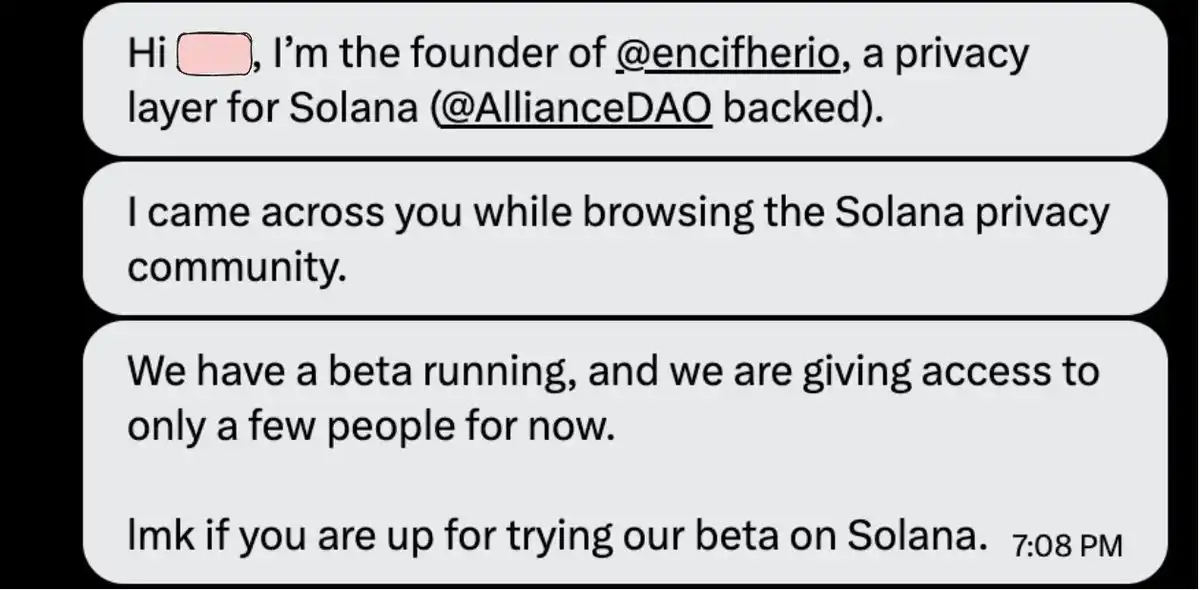
But it is important to note that this process progresses slowly and is very psychologically draining.
In the crypto industry, very few people are genuinely willing to reply to cold messages because scams are rampant. A low response rate is the norm (and can be quite disheartening).
But even so, you still have to do it.
At this stage, your goal is not to acquire 1000 users. Your goal is 10–20 early adopters who possess the following characteristics: genuinely care about the problem you are solving, are willing to try your product, can provide honest, direct feedback
These early users will gradually become your support system. Early-stage products almost always face frequent issues, and it is these users who help you get through the most vulnerable stages.
6. Rapid Iteration
The pace of the cryptocurrency industry is extremely fast. The narrative changes quickly, and user attention spans are even shorter.
If the product you are building doesn't provide real value, it's hard to get attention; even if you briefly capture attention without value, it won't last.
At most, it can only bring a short-lived hype, but the product itself cannot survive in the long term.

This is the advice toly gave to developers at Breakpoint 2025.
The core essence consists of only three points: deliver quickly, iterate frequently, and be willing to make radical adjustments.
I also learned a very important thing: users don't always directly tell you what to do next.
You need to judge by observing their behavior: what are they doing repeatedly? What workarounds or detours are they using? What are they already willing to pay for?
Many ideas may sound reasonable, but most users may not be willing to pay for them.
7. Make Your Website "Grandma-Friendly"
I don't know why this still needs to be emphasized, but let me say it again: "Don't make any assumptions about users."
If you think users should understand, you are wrong. What seems obvious to us developers who have spent hundreds of hours building a product is completely unfamiliar to first-time users.
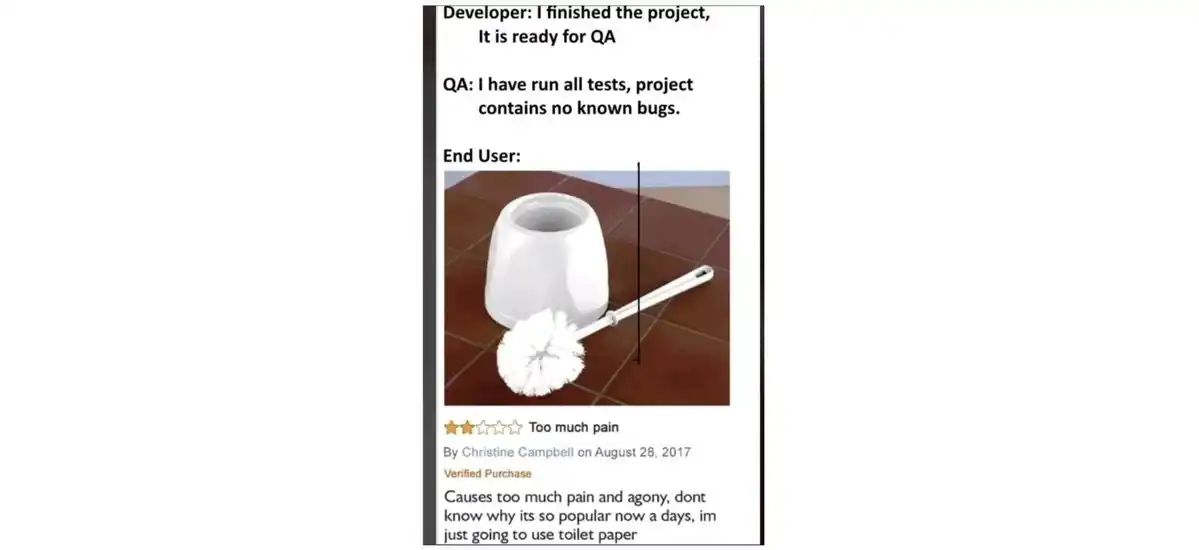
Do not introduce any new concepts or workflows. Only use simple, familiar, and truly user-friendly elements. The click path should be as streamlined as possible, and within 5 seconds of entering the application, users should be able to see, understand, or perceive the value of the product (this is something we are still continuously optimizing).
I can't attach screenshots, but I have received many DMs where users completely misunderstood the purpose of a certain feature.
Conclusion
Building consumer-grade crypto products is both fun and challenging.
Speed, ultimate focus on the user, and distribution ability are often more important than "perfect technology."
This is very different from B2B products, but I still believe it was the right choice we have made.
This post is already long enough, so I'll save my fundraising experience for the next one. Lastly, just use encrypt.trade directly :)
If this content resonates with you, or if you're also working on consumer-facing crypto products and want to discuss GTM, distribution, or the product itself, feel free to DM me.
I'm always happy to connect with other founders and developers.
You may also like

$10,000 in TRUMP Token vs. $10,000 in Nasdaq: The "Trump Trade" That Actually Worked in 2026
Morning Report | Vitalik outlines Ethereum's long-term roadmap, Lean Ethereum will become the third major iteration; SK Hynix seeks to attract more AI investors by listing in the U.S
The impact of OUSD on Circle, Tether, and Paxos: not a single negative factor, but a more complex reshaping of competition
Li Feifei's latest long article: When video generation, robots, and NVIDIA all claim to be world models, we need a taxonomy
Blaming the desolation of the cryptocurrency world on the rise of AI is a form of intellectual laziness
Strategy Founder: The Next 10 Years of Bitcoin
Forbes Special Report: Stablecoin cross-border payments are faster now, but not cheaper yet
A valuation of 8 billion dollars, doubling in 8 months! What makes the crypto-friendly bank Erebor Bank stand out?
340 billion valuation: Li Yanhong's largest IPO, a seat in Kunlunxin's shares is hard to come by
Stablecoins are the "royalists" of the crypto world: Open USD brings the old currency system into play
Cape Verde 2-3 Argentina: The Underdog Team That Stunned the World in Defeat
Cape Verde's run ended in a 3-2 defeat to Argentina, but their journey — three unbeaten draws, one heroic goalkeeper, and a fight that pushed the defending champions to the brink — is the kind of story markets recognize too: small caps can rattle blue chips long before anyone expects it.
Semiconductor stocks plummet, yet Anthropic wants to create a 2nm chip
Where is Zhao Changpeng's billion-dollar investment going? YZi Labs' investment landscape fully revealed
Ethereum Foundation Report: A Basic Guide to Ethereum for Governments and Financial Institutions
A pre-announced harvesting case: After the cryptocurrency price dropped by 99%, the public chain Saga exited to transform into AI
When American giants collectively "defect" from Chinese AI models
BIS Report Compliance Observation: The Real Risks of Stablecoins, Not Just "Depegging"
Portugal 2-1 Croatia: Ronaldo's 20-Year Knockout-Stage Drought Ends With a Debt Finally Collected
Portugal beat Croatia 2-1 in the 2026 global football championship's knockout rounds as Ronaldo scored his first-ever knockout-stage goal, Gonçalo Ramos struck a stoppage-time winner, and VAR ruled out a late equalizer for offside.
$10,000 in TRUMP Token vs. $10,000 in Nasdaq: The "Trump Trade" That Actually Worked in 2026
Morning Report | Vitalik outlines Ethereum's long-term roadmap, Lean Ethereum will become the third major iteration; SK Hynix seeks to attract more AI investors by listing in the U.S
The impact of OUSD on Circle, Tether, and Paxos: not a single negative factor, but a more complex reshaping of competition
Li Feifei's latest long article: When video generation, robots, and NVIDIA all claim to be world models, we need a taxonomy
Blaming the desolation of the cryptocurrency world on the rise of AI is a form of intellectual laziness
Strategy Founder: The Next 10 Years of Bitcoin


