
For $3.3 Billion Loan, El Salvador May Drop Mandatory Business Acceptance of BTC Payment


Original Article Title: "El Salvador Plans to Repeal Mandate for Businesses to Accept BTC Payments in Exchange for $3.3B IMF, World Bank Loan"
Original Article Author: DaFi Weaver, Dynamic Trend at BlockTempo
El Salvador became the world's first country to adopt Bitcoin (BTC) as legal tender in mid-2021, a decision that was met with strong criticism and pressure from the International Monetary Fund (IMF) at the time.
Prior to this, the Salvadoran government had been seeking an IMF credit line to address its fiscal issues, but the IMF demanded that El Salvador amend its Bitcoin law, stating that Bitcoin's legal tender status was a major obstacle to the country receiving credit support. As a result, negotiations between the two parties stalled for two years.
El Salvador Plans to Repeal Mandate for Businesses to Accept Bitcoin Payments
However, according to a report by the Financial Times citing sources familiar with the matter, El Salvador is currently in negotiations with the IMF and is considering taking a step back by repealing the legal requirement for businesses to accept Bitcoin as a form of payment. Instead, businesses would autonomously decide whether to accept Bitcoin payments in exchange for a $1.3 billion loan from the IMF.
The agreement is expected to be reached in the next two to three weeks. The report states that an IMF delegation has arrived in El Salvador to finalize the details of the agreement with President Nayib Bukele's government.
It is worth noting that the agreement with the IMF will also unlock two additional loans, one of $1 billion from the World Bank, and another of $1 billion from the Inter-American Development Bank. Therefore, in total, El Salvador plans to relax the Bitcoin acceptance requirement, with the opportunity to receive up to $3.3 billion in loans.
In order to reach an agreement with the IMF, El Salvador will also need to take measures to reduce the government deficit. Sources revealed that the Salvadoran government plans to reduce the budget deficit by 3.5 percentage points of GDP over the next three years through spending cuts and tax increases. Additionally, the government will pass an anti-corruption law and increase foreign reserves from $11 billion to $15 billion.
In response to this news, an IMF spokesperson declined to comment, citing the organization's policy of not discussing ongoing negotiations.
IMF Calls for Abandoning Bitcoin Strategy
The IMF has consistently opposed El Salvador's adoption of digital currency, citing risks to financial stability and integrity, and has often called on the Bukele government to cease accepting cryptocurrency as legal tender.
In October of this year, the IMF once again recommended that El Salvador scale back its Bitcoin-related policies and strengthen the regulatory framework for digital assets. Julie Kozack, Director of the IMF Communications Department, said at the time:
“We recommend narrowing the scope of the Bitcoin Law, strengthening supervision and regulation of the Bitcoin ecosystem, and limiting the government's exposure to Bitcoin.”
As early as two years ago, when El Salvador adopted BTC as legal tender, an IMF spokesperson criticized the country's Bitcoin law, warning of “macroeconomic, financial, and legal issues” it would raise. The IMF has repeatedly highlighted the volatility and potential risks of Bitcoin, which could threaten El Salvador's economic stability, hence the call for a reassessment of related policies.
However, in August of this year, the IMF also stated that many of the risks of El Salvador's Bitcoin experiment have “not materialized” yet. While the tone seems to have softened, the statement added that El Salvador needs to minimize the risks associated with adopting Bitcoin as legal tender as much as possible.
El Salvador Holds Nearly $600 Million in Bitcoin
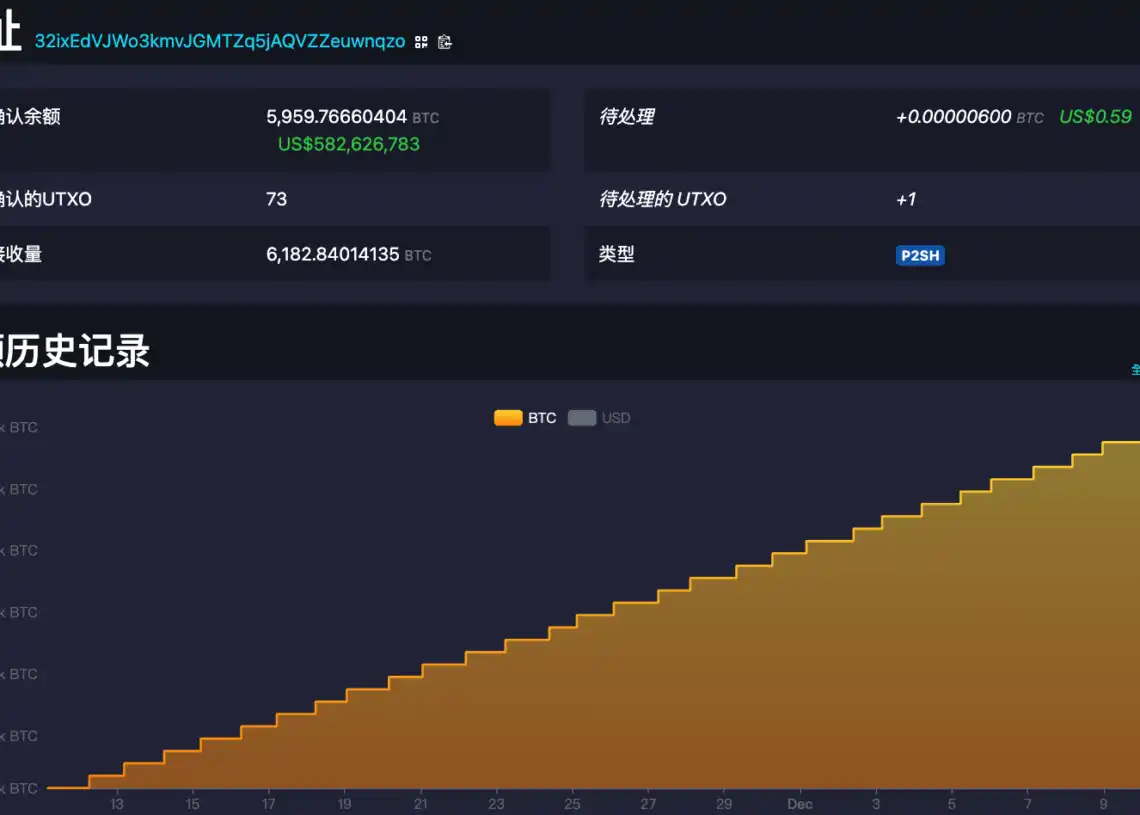
Currently, El Salvador continues to purchase one Bitcoin per day, with a total Bitcoin holding of 5,960 coins valued at over $580 million.
As Bitcoin reached the $100,000 milestone, El Salvador's sovereign bonds also rebounded from a significant discount to near-par trading. Bukele commented last week on the simultaneous rise in bond prices and Bitcoin, stating:
“For the first time in history, Bitcoin has driven a sovereign bond up in traditional markets.”
You may also like

Morning News | Bitmine issues preferred shares to raise $300 million; Polymarket accuses Kalshi of industrial espionage

Privacy coin trust crisis! ZEC plummets over 56% in a single day

Who is leading the price discovery in the cryptocurrency market? Measured delays on platforms like Binance and Hyperliquid

Anthropic launches IPO: Business miracle or valuation bubble?

What Is SpaceX IPO and Why Is Everyone Talking About It?
Macroeconomic Analysis of the African Payment Market Landscape

Morning Report | Coinbase Ventures makes its first investment in ENA; SpaceX plans to set the IPO price at $135 per share

Full text and analysis of the speech by the CEO of SanDisk at the 42nd Annual Strategic Decision Conference of Bernstein

Bitcoin Price Prediction 2030: Ark Invest Forecasts $710K

WEEX Review 2026: Fees, Security and Trading Features

SOL Price Today: Live Solana Price, Charts & Market Data

What Is a Bitcoin ETF: Spot vs Futures Explained

Why Is Bitcoin Dropping 15% While Nasdaq Hits Record Highs?

Morning Report | Robinhood completes acquisition of WonderFi for $180 million; Anthropic submits IPO draft application to SEC confidentially; Google plans to raise $80 billion in financing

Why do I still have confidence in ETH?

CRCL surges and plummets, COIN follows with a dive: The real battle for interests behind the CLARITY Act

Tokenized US stocks are not the "liquidity killer" of the crypto market

What Is TradFi and Why Is Everyone Talking About It in 2026?
Morning News | Bitmine issues preferred shares to raise $300 million; Polymarket accuses Kalshi of industrial espionage
Privacy coin trust crisis! ZEC plummets over 56% in a single day
Who is leading the price discovery in the cryptocurrency market? Measured delays on platforms like Binance and Hyperliquid
Anthropic launches IPO: Business miracle or valuation bubble?
What Is SpaceX IPO and Why Is Everyone Talking About It?
Macroeconomic Analysis of the African Payment Market Landscape


