
「Green Bullchain」 Eclipse TGE Is Coming, Is Ethereum's New Savior Here?





The self-proclaimed Solana on Ethereum, the "beef chain" Eclipse, gathered over 1000 participants in its recent Discord community AMA, revealing that the TGE token's ticker symbol is $ES and hinting that Eclipse's TGE may be imminent. This article will provide a preliminary introduction to what this green "beef chain" is and how it has emerged among the myriad Layer 2 solutions.

What Is Eclipse?
Eclipse is a blockchain platform developed by Eclipse Labs, operating on Ethereum's Layer 2 and being the first SVM chain allowed on Ethereum's L2. Its goal is to combine Solana's fast execution capabilities with Ethereum's liquidity and security, providing developers with an efficient, robust environment to build decentralized applications.
Vijay Chetty serves as Eclipse's CEO, previously holding business development roles at Uniswap and dYdX, as well as having worked at BlackRock and Ripple. Chief Technology Representative Ben Livshits also has a strong background, having served as VP of Research at zkSync, Chief Scientist at the Brave browser, a research scientist at Microsoft Research, and an associate professor at Imperial College London.
It has gone through three rounds of funding, with the latest Series A round raising $50 million at a $10 billion valuation, led by notable VCs like HackVC and PolyChain, with participants including OKX Ventures, Bankless Ventures, Delphi Digital, among others. The luxurious team lineup combined with the lavish funding lineup has created high expectations for Eclipse in the market.
Notably, Eclipse's highly recognizable mascot "Turbo the Cow" is inspired by Eclipse's powerful sequencer model known as the "beefy sequencer," seen as a critical part of the platform's technical foundation, giving the mascot a distinctive and charismatic personality.

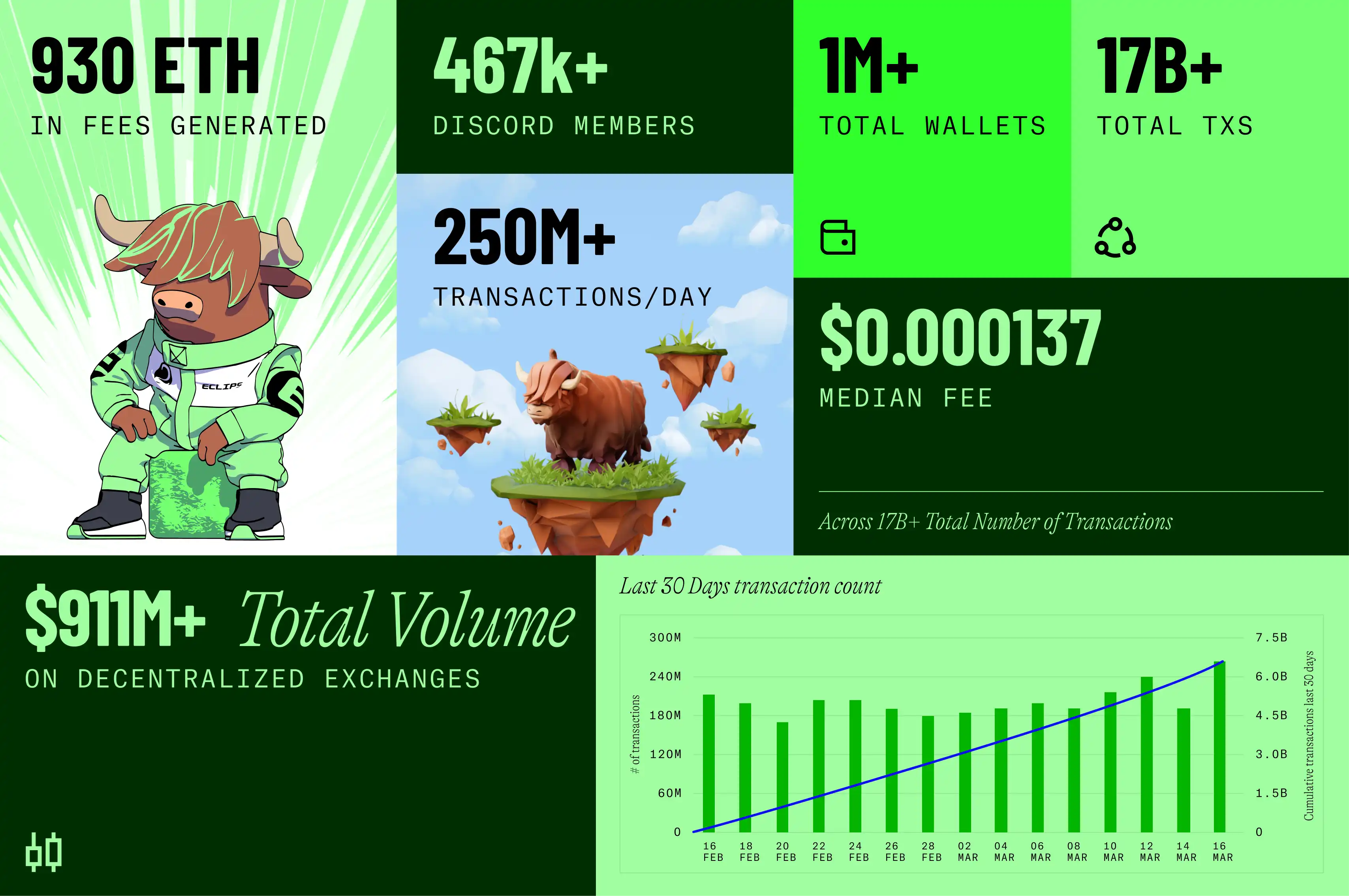
Since its mainnet launch in November last year, the platform has generated 930 ETH in fees, with over 467,000 Discord members, and over 1 million wallets participating, accumulating over 17 billion transactions. Eclipse processes over 250 million transactions per day, with DEX trading volume exceeding $9.11 billion, and daily transaction counts fluctuating between 120 million and 240 million.
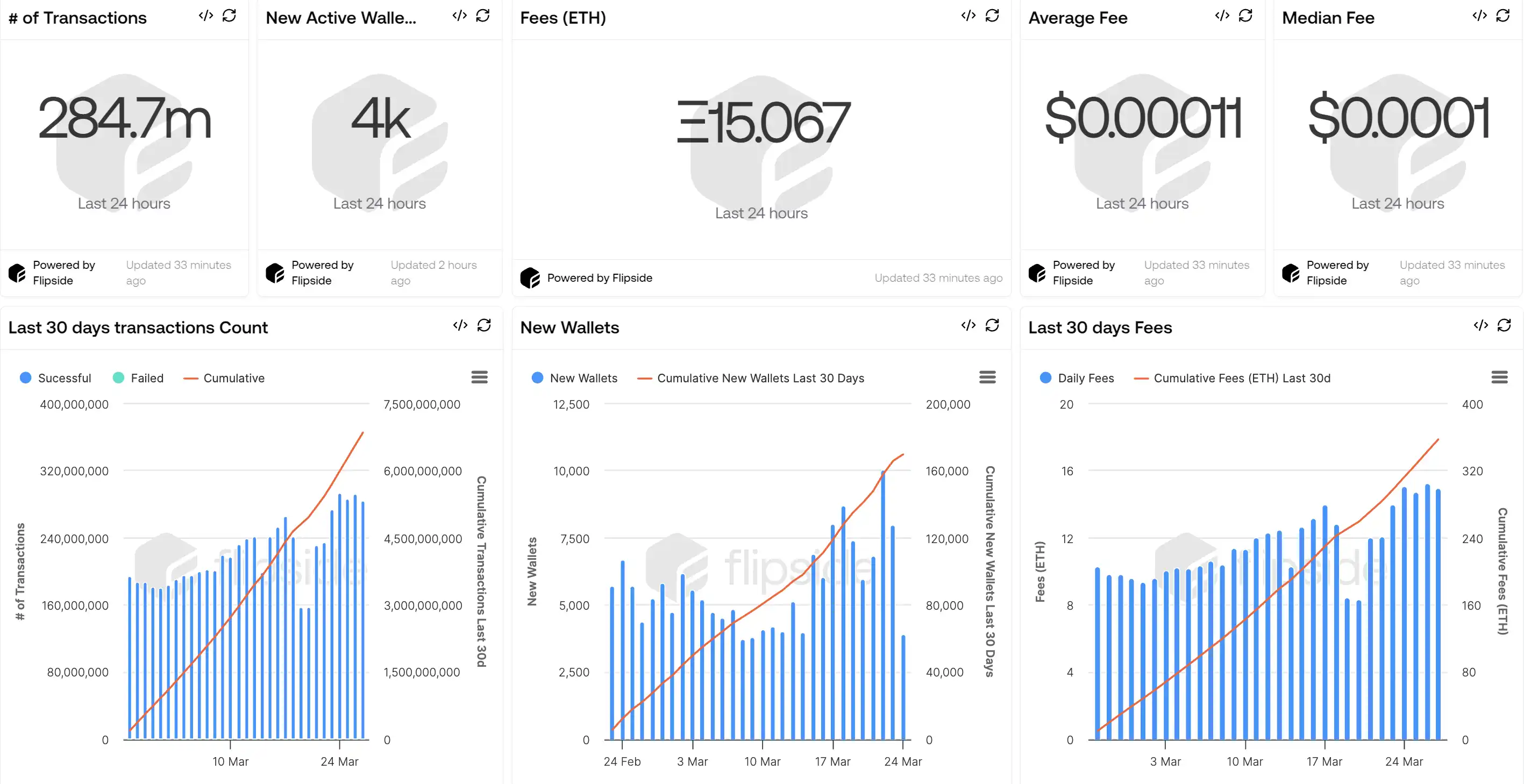
Looking at the on-chain data, both the number of transactions and the creation of new wallets continue to show a significantly robust growth curve, almost presenting an angle of more than 45 degrees on the chart.
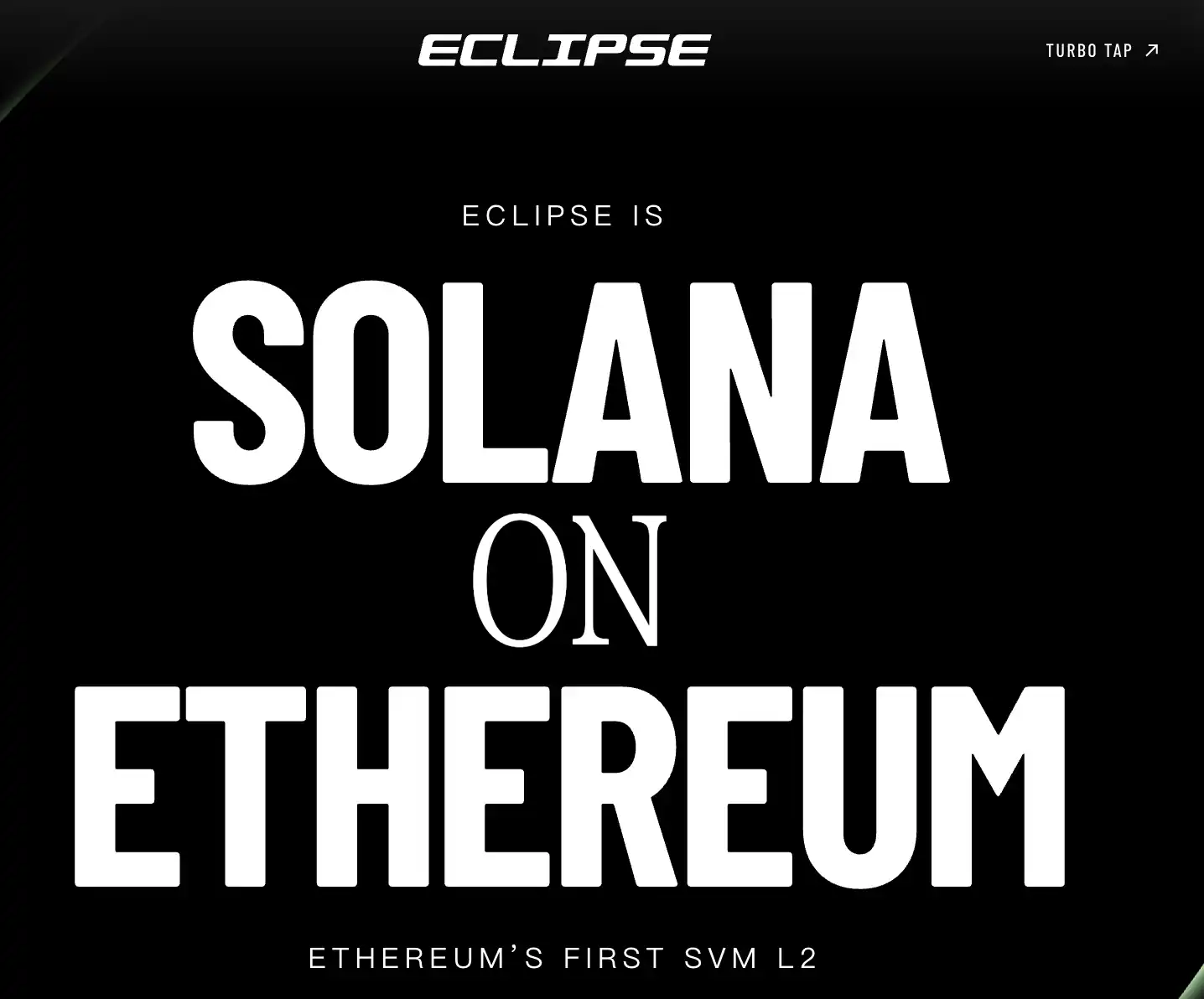
Solana on Ethereum?
For those who desire both the security and liquidity of Ethereum as well as the high-speed processing of Solana, how does Eclipse achieve this? This brings us to the concept of GSVM (GigaScale Virtual Machine) officially proposed by the team.
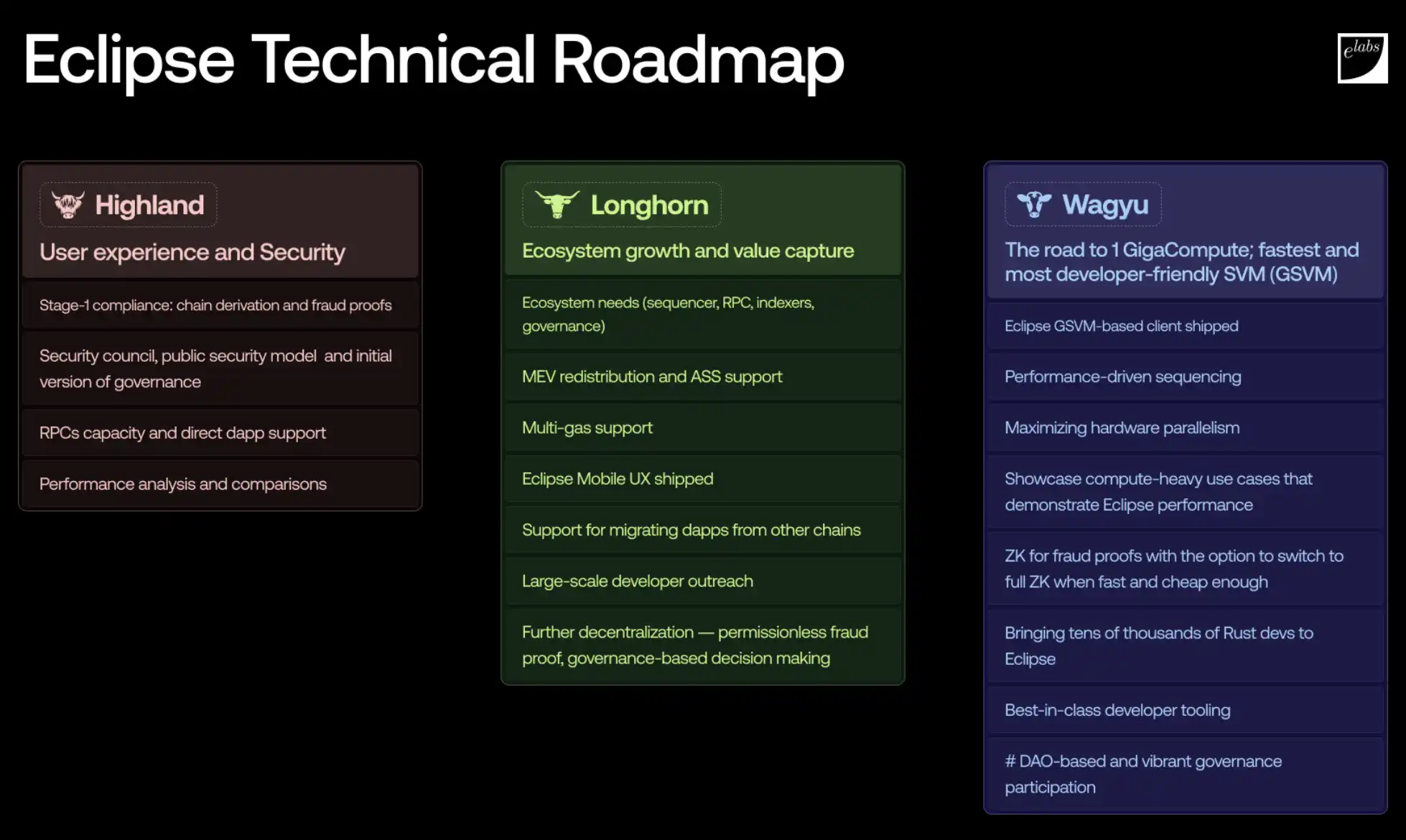
Traditional ETH Layer 2 solutions such as Optimistic Rollup are limited by the EVM's serial execution and hardware adaptability. Therefore, Eclipse created GSVM to achieve a similar level of performance to Solana's Sealevel parallel runtime but in L2 form, through a combination of software and hardware design, cross-layer optimization, and four major innovations: "Software-Hardware Co-Design," "Dynamic Scaling and Hotspot Isolation," "Cross-Layer Optimization," and "Computational Abstraction and Parallelism," establishing a strong technological moat.
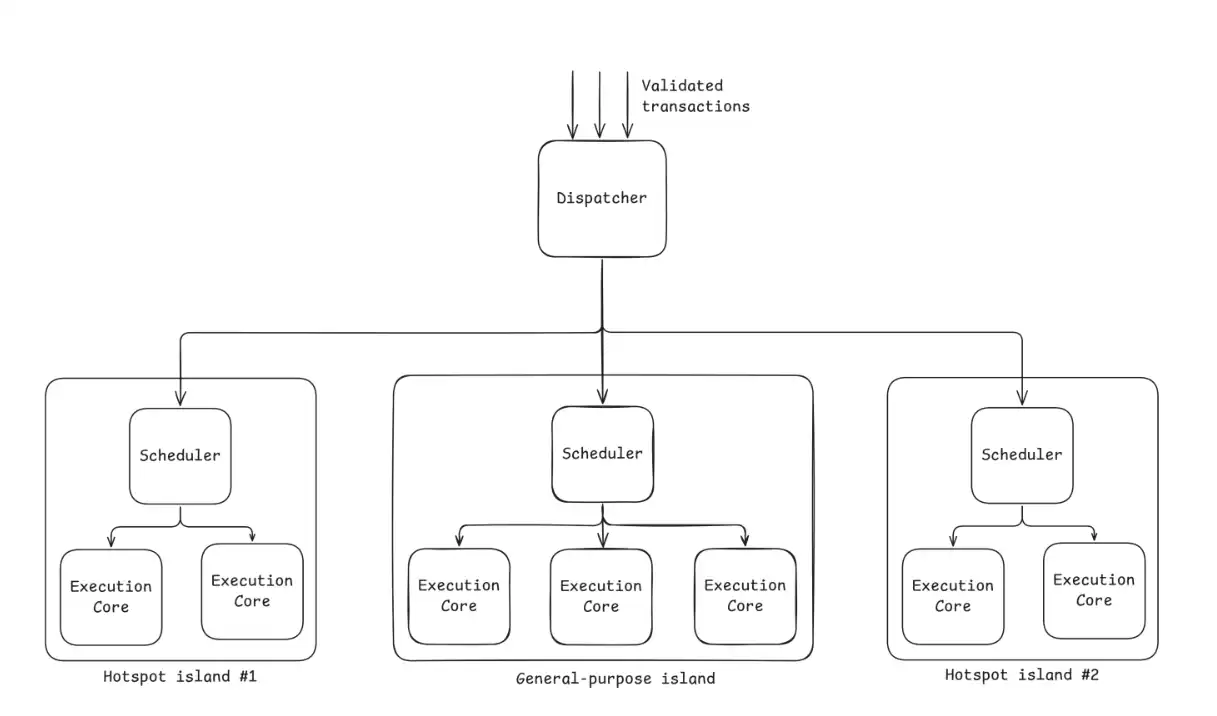
In simple terms, if Ethereum can be likened to a traditional city's main road with strict traffic rules and high tolls, and Solana to Germany's autobahn with multiple parallel lanes and lower tolls, then Eclipse is akin to a high-speed highway built on the main road, with entry and exit points requiring passage through the main road.
The "Software-Hardware Co-Design" equips vehicles with smart engines (GPUs/FPGAs) and automatic navigation (SmartNICs) that adjust speeds automatically based on road conditions. When a heavy truck (complex contract transaction) passes through, a dedicated lane is opened with computational acceleration, while a regular car (simple contract transaction) uses the general fast lane. The "Dynamic Scaling and Hotspot Isolation" feature dynamically allocates CPU resources, directly increasing the highway lanes during peak periods. If there are popular projects, this segment of the road can be isolated as a hotspot, providing resources without impacting the entire chain's operation. The "Cross-Layer Optimization" ensures real-time data exchange among high-speed gas stations, repair stations, etc. By prefetching transaction data to instruct the gas stations to prepare gas in advance and utilizing AI for "enhanced scheduling," potential traffic congestion or damage in certain blocks can be predicted in advance. "Off-chain computation + On-chain proof" delegates complex computations to off-chain processing, where toll booths (Ethereum's main road) use license plate verification (ZK proof) to allow vehicle passage.
Through the above path, Eclipse elevates data security and processing efficiency to the highest level, enabling it to handle more widely adopted large-scale applications, making it more suitable for the current App era of blockchain.
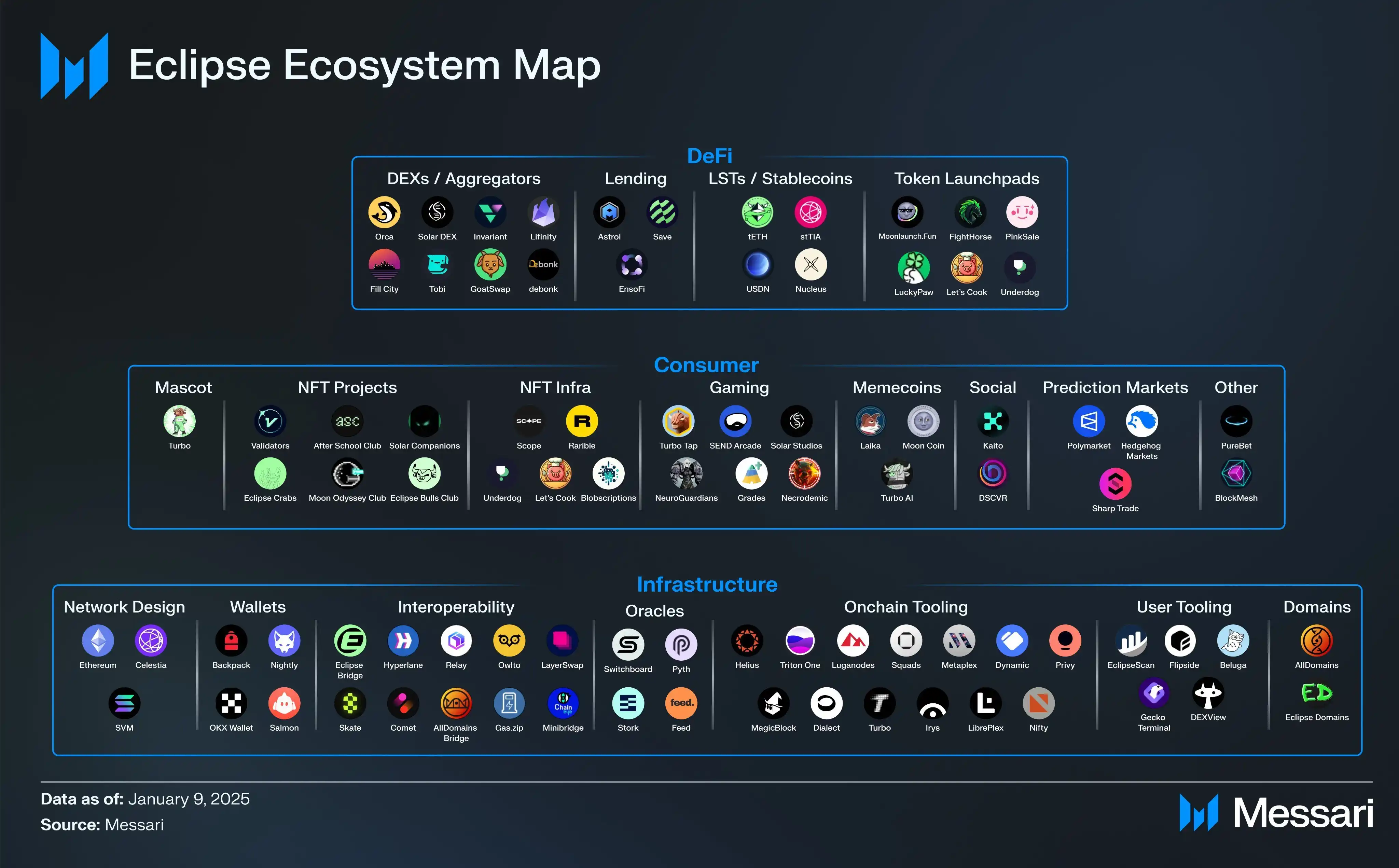
Eclipse Ecosystem Projects
As of now, the Eclipse ecosystem has attracted more than 60 dApps and service providers, covering areas such as DeFi, gaming, and consumer applications. The following BlockBeats will further introduce some of the native projects.
NFT Ecosystem
After School Club
Eclipse's official OG Genesis series "After School Club," with a total of 10,000 pieces, currently has a floor price of 0.49 ETH. It was revealed through an official AMA that there will be a certain airdrop proportion, but the specifics are unknown. The current floor price is already high, so please carefully consider market volatility if you wish to participate.

Scope
Scope is Eclipse's NFT launchpad and secondary market trading platform. It has a significant official background, such as the official NFT ASC issued on this platform. The interactive mode involves trading NFTs and minting NFTs, but there are not many new projects at the moment.

Minty.Market
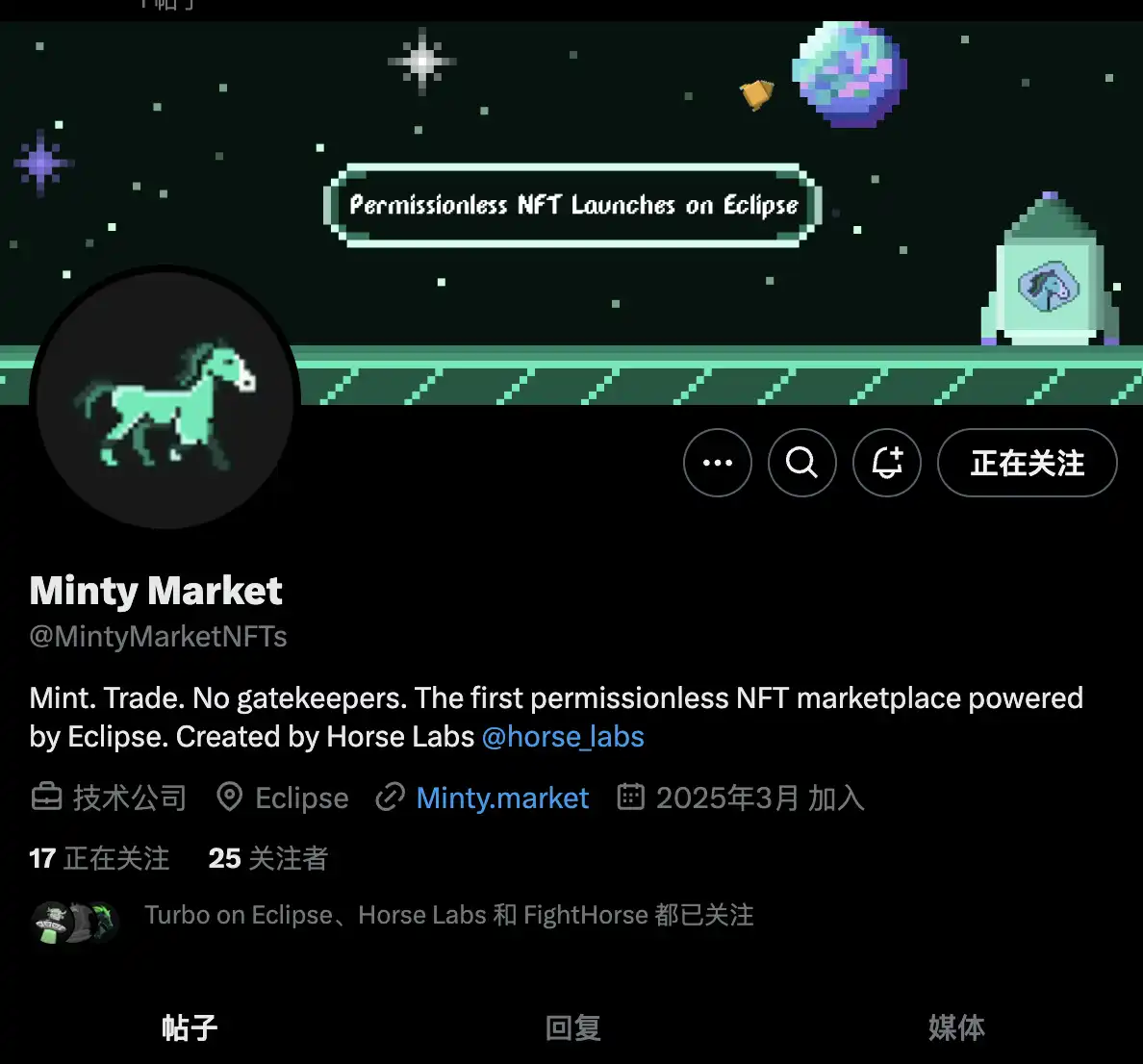
The HorseLabs-launched permissionless NFT platform just officially launched on March 28, which also created NFT and Meme launch platforms.
GameFi Ecosystem
Send Arcade
SendArcade is an innovative blockchain gaming platform running on the Solana blockchain and Eclipse mainnet, launched by Send. Players familiar with the Solana ecosystem know that Send is a key intermediary for Solana's AI initiatives, responsible for its ecosystem's hackathons and the launch of Solana's On-Chain Kit. Last month, Send Arcade players on Eclipse surpassed 45,000.

Turbo Tap
TurboTap is Eclipse's official cattle-raising game, which involves raising the mascot "Turbo Cow" mentioned above, and is a GameFi that all current Eclipse players must participate in. The gameplay is simple: raise cattle. As long as your wallet or protocol has funds, you can passively earn grass, similar to how holding tokens in Sonic earns PP points. This gamified mechanism converts Eclipse's point system (expected airdrop) into on-chain funds.

Hedgehog
Hedgehog is equivalent to Eclipse's PolyMarket, where users can participate in various prediction markets and earn rewards.

DeFi Ecosystem
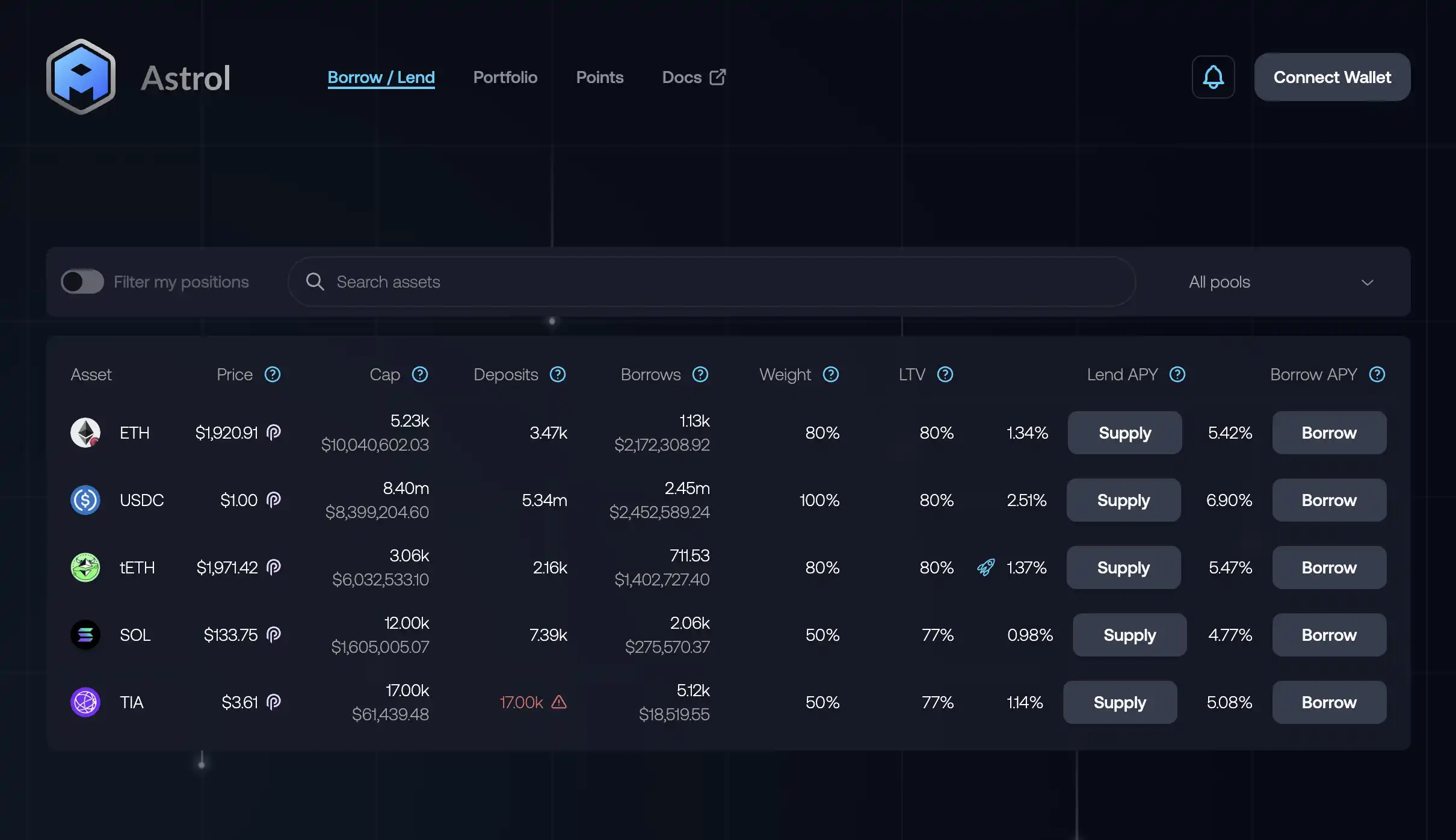
Astrol
Astrol is Eclipse's native lending protocol, currently running a token distribution event. Users who lend on Astrol not only earn lending rewards but also receive future airdrops of new tokens.
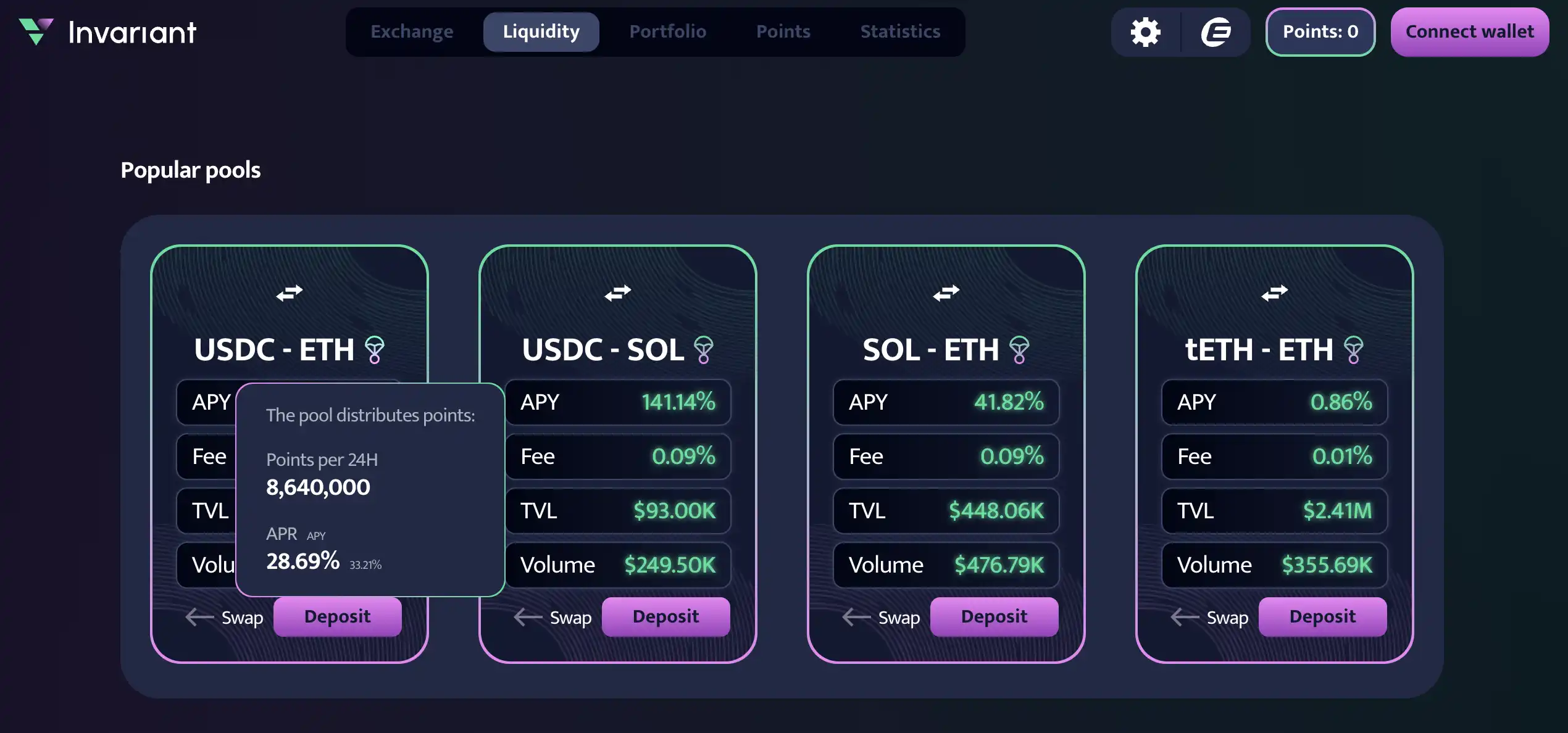
Invariant
Invariant is Eclipse's native DEX protocol. When interacting with it, users participating in several liquidity pools can also expect airdrops of platform tokens.
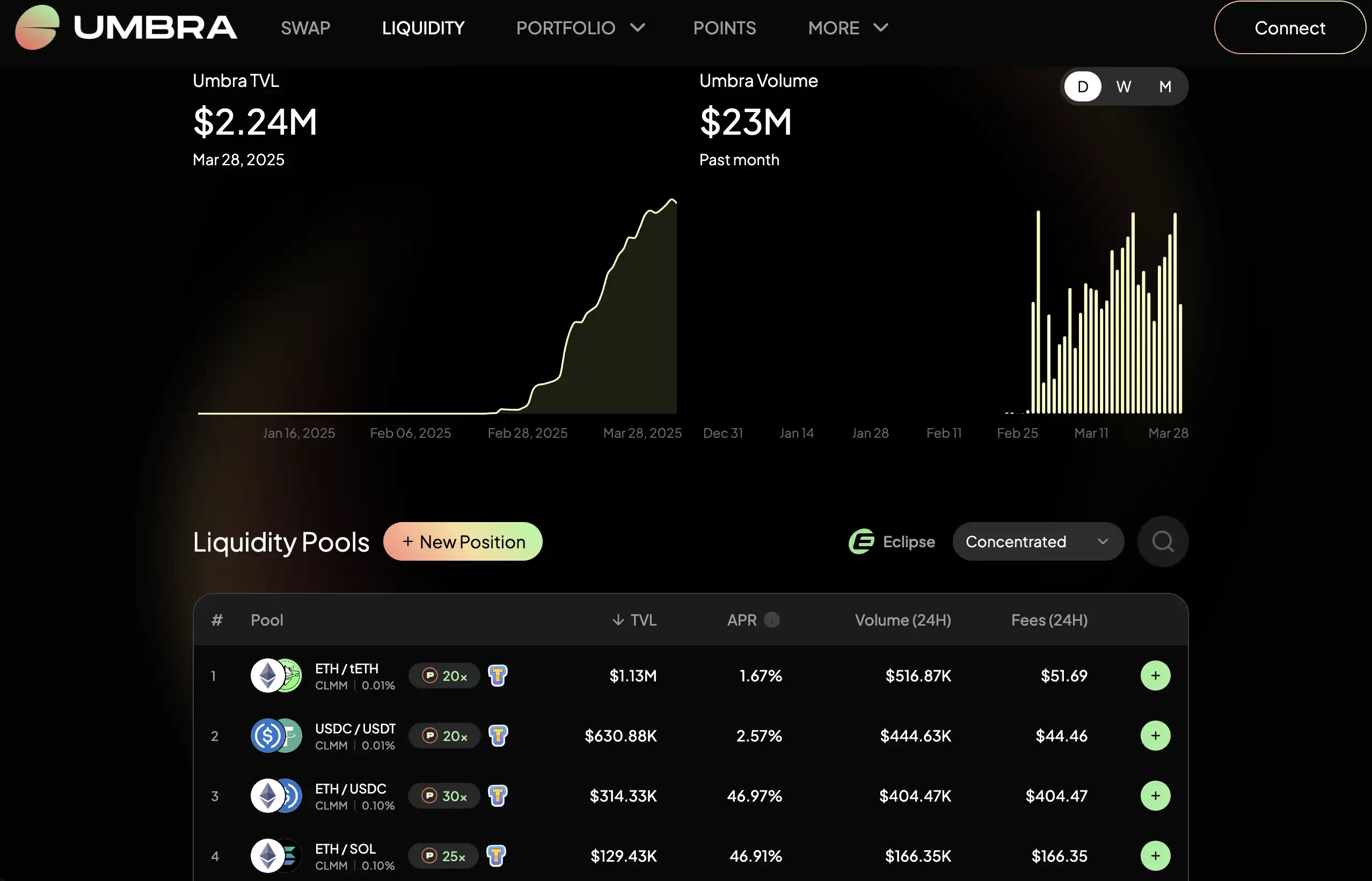
Umbra
Umbra is Eclipse's native DEX deeply integrated into the ecosystem. Recently, it collaborated with Astrol, Nucleus, and the Eclipse team. By providing liquidity to LP pools, users can earn incentives from both platforms, as well as bonus points from the official Turbo Tap cattle-raising game.
Meme Ecosystem
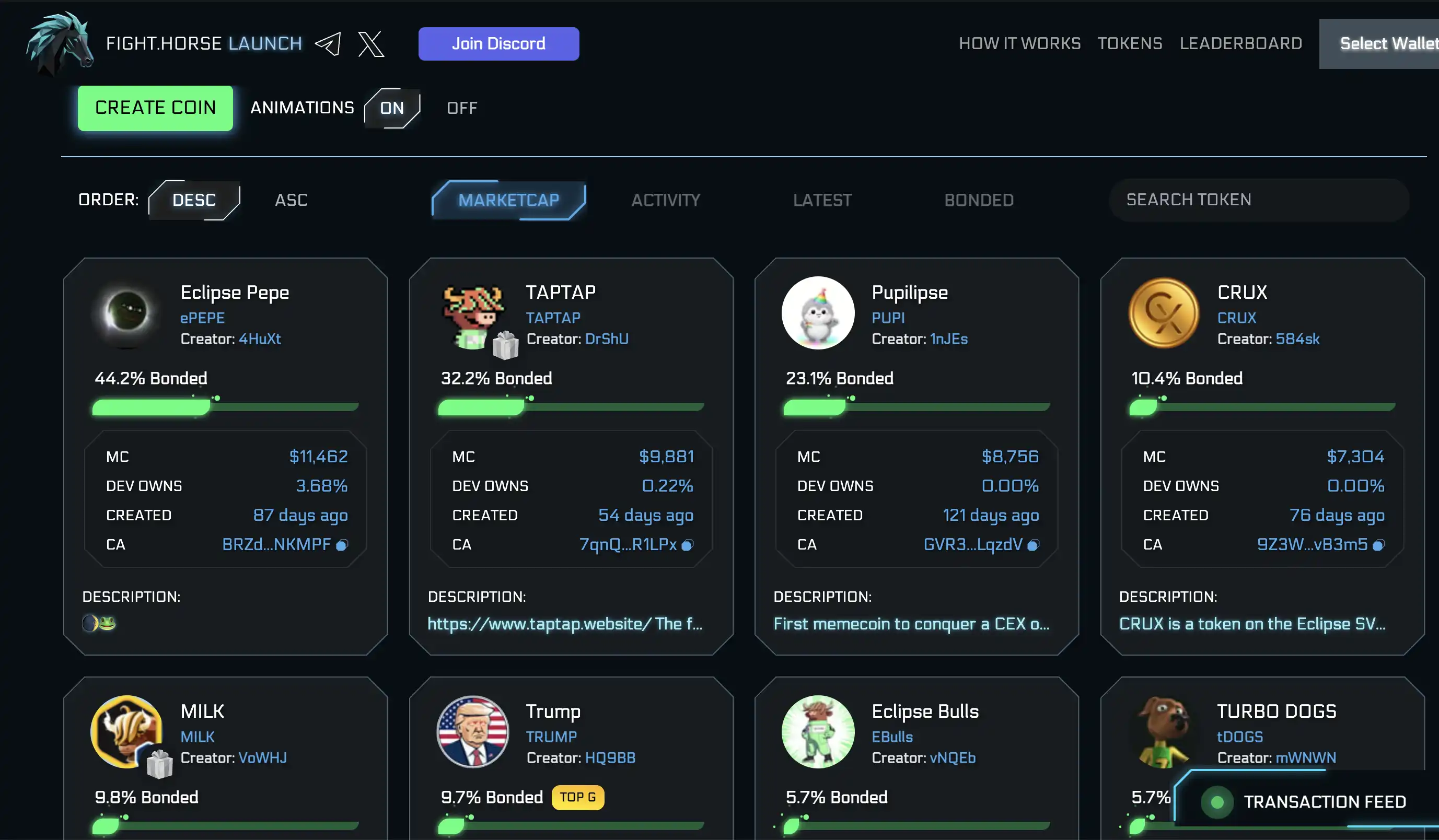
Fight.Horse
Fight.Horse, as SVM's native Meme launcher, is a product of HorseLab and is currently only deployed on Eclipse. Although the MemeCoin culture and infrastructure in the Eclipse ecosystem are not yet widespread, with few basic dashboards and supportive bots, the combination of Solana's ease of use and Ethereum's liquidity concepts is promising. With more ecosystem support, it could become a significant liquidity venue.
Eclipse's "Turbo the Cow" is almost ready to go, with the TGE looming on the horizon. In such a crowded Layer 2 market, will Eclipse, as its narrative goes, be able to simultaneously capture Ethereum's liquidity and high performance to usher in a new era of blockchain applications, or will it, like most L2 solutions, fade into obscurity? Everything is still unknown, but as we move towards greater mainstream adoption, the relentless march of new technologies is necessary, and Eclipse has undoubtedly contributed its fair share.
You may also like

The AI gamble of mining companies: Valuations enter a phase of differentiation, and it's hard to turn the tide

A letter from Alliance to entrepreneurs: Written on the occasion of Cursor selling for 60 billion dollars

Stablecoins Finally Find Real Returns: On-Chain Reinsurance Re Explained | Interview with Re Founder Karan Saroya

The impossible triangle is simply a pseudo problem

Will MicroStrategy fall into a death spiral? What will the macro trend be in the second half of the year?

Blockchain Capital Partner: The Core Secret of Arbitrage
STRC unanchored by 11%, can the perpetual motion machine of Strategy still operate?

Bitcoin Market Analysis 2026: Can BTC Reach $150K by Year-End?
Bitcoin ETF Outflows Hit a Record $4.4 Billion: What Are Traders Doing With Their Cash?
WEEX App Just Got Smarter – New Tabs for Faster Trades & Easy Asset Management

WEEX All-New Search Features: Find, Trade & Earn Faster Than Ever

Morning Report | Illinois signs the strictest digital asset tax law in the U.S.; RWA tokenization market size surpasses $43 billion, institutions accelerate the migration of on-chain assets
Full version of the debut Q&A! Federal Reserve Chairman Waller: Sticking to the 2% inflation target, establishing five special working groups, individual did not submit the dot plot

From Disruptor to Shadow Market: The Crypto Market is Becoming a Colony of Traditional Finance
Dalio's important long article: How to position in the current market environment?
OKX Star analyzes Binance's competitive advantages: when regulation levels the playing field, competition has just begun

New gameplay for participating in initial offerings on cryptocurrency exchanges
Why Is Bitcoin Down Today? What the Hawkish FOMC Means for SpaceX, Gold and Nasdaq
The AI gamble of mining companies: Valuations enter a phase of differentiation, and it's hard to turn the tide
A letter from Alliance to entrepreneurs: Written on the occasion of Cursor selling for 60 billion dollars
Stablecoins Finally Find Real Returns: On-Chain Reinsurance Re Explained | Interview with Re Founder Karan Saroya
The impossible triangle is simply a pseudo problem
Will MicroStrategy fall into a death spiral? What will the macro trend be in the second half of the year?
Blockchain Capital Partner: The Core Secret of Arbitrage


