
How to View the Neobank Era Post Crypto Boom?



Original Article Title: Building Permissionless Neobanks
Original Author: @0xfishylosopher
Translation: Peggy, BlockBeats
Editor's Note: Ten years ago, financial technology neobanks improved the banking user experience through mobile apps, but did not change the underlying system of fund movement. Today, cryptographic technology is attempting to touch deeper transformative changes, restructuring "how money flows".
This article starts from the four dimensions of "Store, Spend, Grow, Borrow", outlining the development path and competitive landscape of cryptographic neobanks: from self-custodial wallets and stablecoin payments, to on-chain transactions, lending, and yield mechanisms. The author, Jay Yu (member of the Pantera Capital research and investment team), suggests that, focusing on the speed of fund circulation, the breakthrough of cryptographic neobanks may first appear in high-frequency, high-turnover value-added and lending scenarios, and then gradually expand to payment and storage.
Until privacy, compliance, real-world connections, and credit systems are fully resolved, cryptographic neobanks are still in the early exploration stage. But what can be confirmed is that they are not just new financial applications, but are attempting to build a completely new fund operation track.
The following is the original article:
Introduction
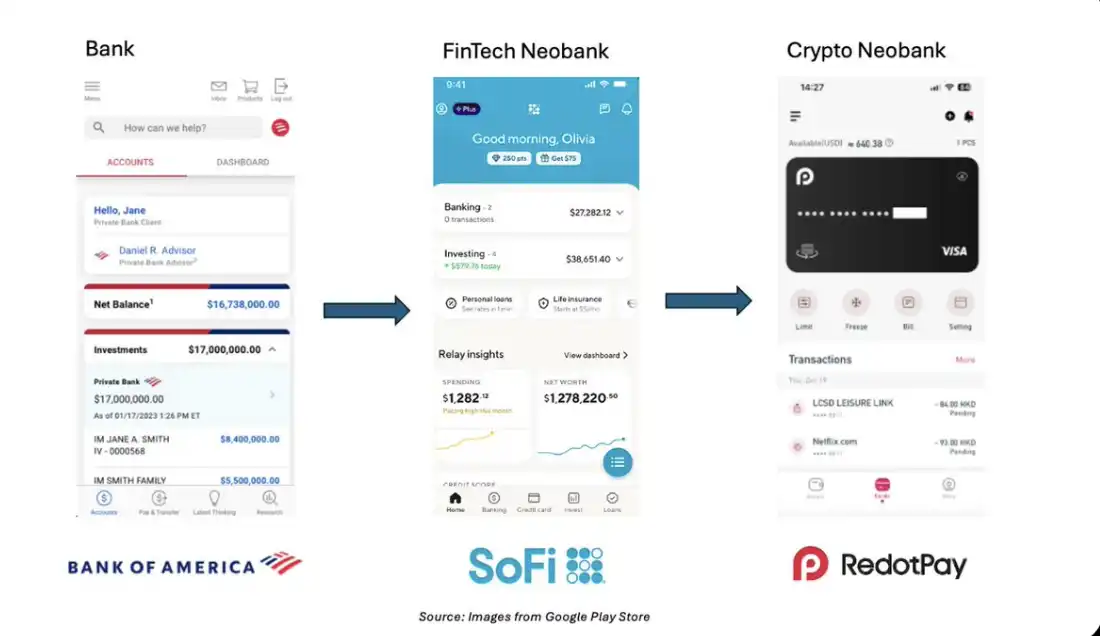
Regardless of which bank or fintech app you open today—whether it's Bank of America, Revolut, Chase, or SoFi—a sense of déjà vu arises when you scroll down in the interface: Accounts, Pay & Transfer, Earn Yield. These interfaces are almost interchangeable.
This highly similar design reveals the underlying logic commonality of banking operations: fundamentally, banks are the interface presentation of the four core relationships we have with "money":
Store: A place to hold and safeguard assets
Spend: Mechanism for daily spending and transfers
Grow: A suite of tools for passive or active wealth management
Borrow: Channel to acquire external funds and leverage
Over the past decade, the proliferation of mobile technology has driven the rise of "neobank" applications such as SoFi, Revolut, Wise, and others. They have made financial services more inclusive and redefined the concept of "unbanking" with an intuitive, always-online digital interface replacing physical branches.
Today, as cryptographic technology enters its second decade, a new paradigm is emerging. From self-custody wallets and stablecoins to on-chain credit and yield mechanisms, the permissionless and programmable nature of blockchain enables a banking-like experience that is global, real-time, and composable.
If the mobile internet gave birth to neobanks, then what cryptographic technology is nurturing is a permissionless neobank: a unified, interoperable, self-custodial interface allowing users to store, transact, earn, and borrow funds in the on-chain economy.
History of Fintech Neobanks
Similar to the crypto industry, the rise of neobanks also occurred post the 2008 financial crisis. Instead of replicating physical branch networks like traditional banks, neobanks resemble more of a tech platform, offering banking services to users through a mobile interface.
Most neobanks collaborate with traditional banks in the background, with the latter providing deposit insurance and regulatory infrastructure, while the neobanks themselves manage the front-end user relationships. With fast onboarding processes, transparent fee structures, and a digitally-centered design, many neobanks have become the preferred entry point for users to save, spend, and manage wealth.
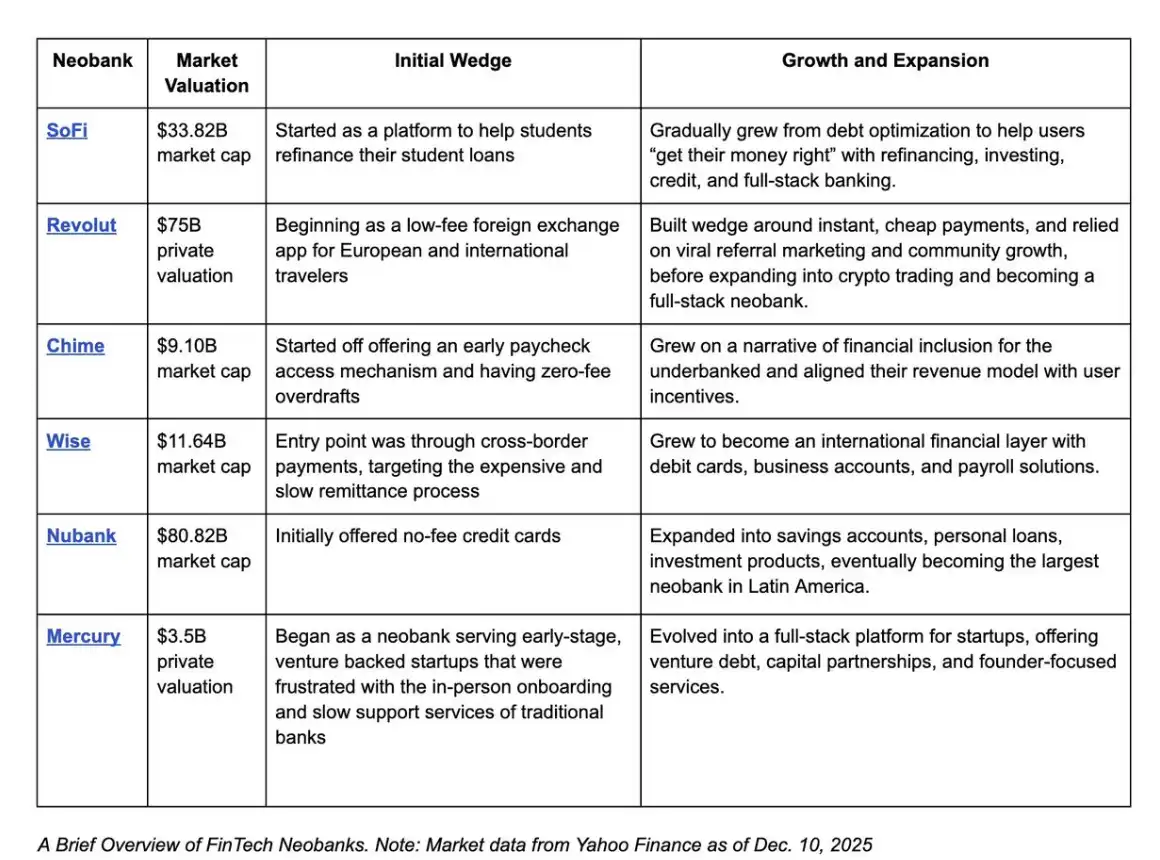
Looking back at the growth trajectory of these multibillion-dollar neobank startups, a common theme emerges: they leverage unique digital product forms to own user relationships, kickstarting a user-centric transaction flywheel through services like refinancing, early access to paychecks, transparent forex rates, or other differentiating features, then gradually expanding their product offerings to extract more value from existing users.
In essence, the success of fintech neobanks lies in their mastery of the "money entry point": by reshaping how users save, spend, invest, and borrow money, they have firmly established themselves as the interface layer for financial interactions.
Today, the crypto industry finds itself at a juncture similar to where neobanks were 5–10 years ago. Over the past decade-plus, crypto has birthed its own set of "wedge products":
Uncensorable Asset Storage Achieved Through Self-Custody Wallet
Low-Threshold Digital Dollar Provided Through Stablecoin
Permissionless Credit Market Represented by Protocols like Aave
And a 24/7 Global Capital Market that can even turn Internet memes into wealth vehicles
Just as mobile internet infrastructure ushered in a new era of banking, programmable blockchain is providing a permissionless financial base layer.
The logical next step is to combine these permissionless backend capabilities with user-friendly frontend of the new banking. The first generation of new banks moved the bank's frontend from physical branches to a mobile interface while keeping the traditional banking system as the backend; today's crypto new banks, on the other hand, do the opposite — they retain the convenient mobile experience but start to alter the underlying path of fund flow: from the traditional banking rails to stablecoins and public blockchains.
In other words, if the new banks rebuilt the bank's frontend on top of the mobile internet, then crypto technology is providing an opportunity to rebuild the bank's backend on a permissionless track.
Map of Crypto Neobanks
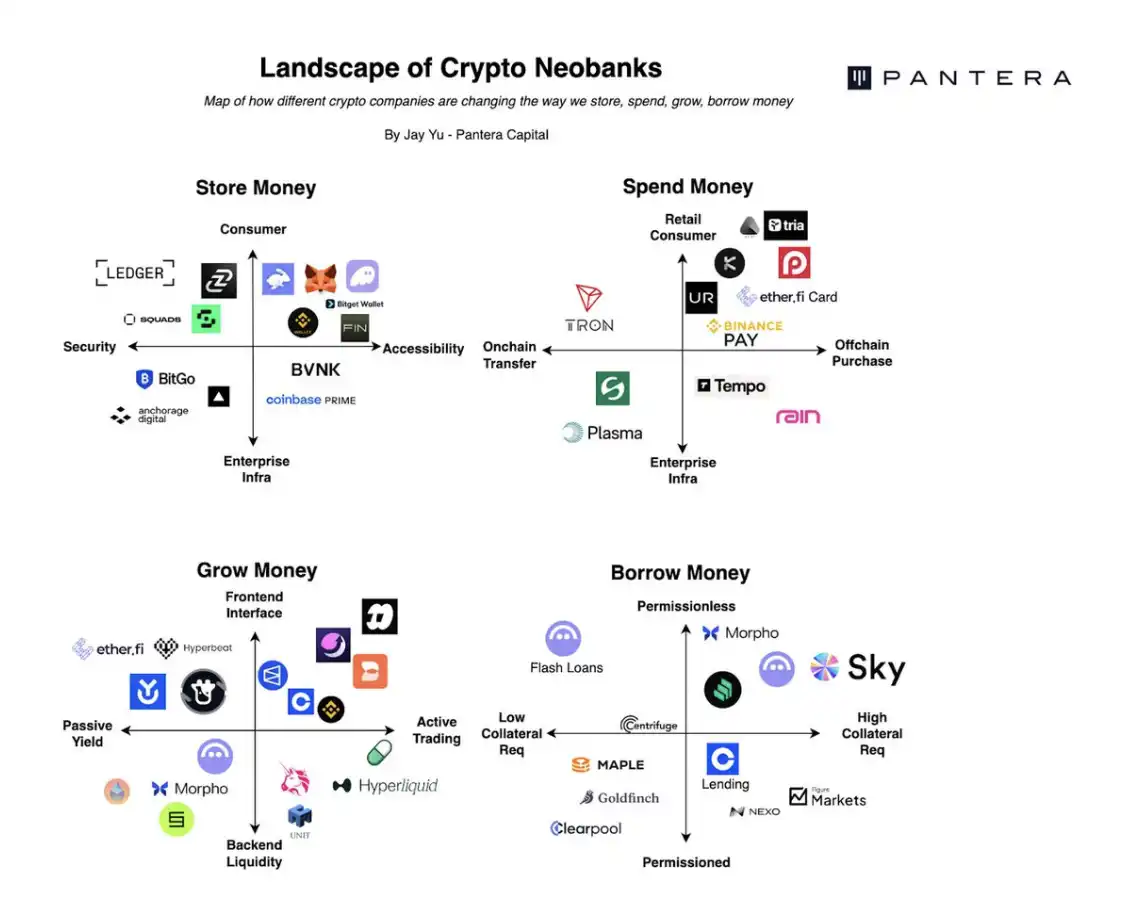
Map of Crypto New Banks
Today, more and more projects are gradually converging under the vision of "crypto neobank." We have seen that on the permissionless crypto track, the foundational capabilities around the four financial relationships of store, spend, earn, and borrow are gradually taking shape:
Self-custody asset storage achieved through hardware wallets like Ledger
Day-to-day payments through Etherfi card or Bitget QR code
Trading on platforms like Hyperliquid to realize asset appreciation
On-chain borrowing through protocols like Morpho
At the same time, there are plenty of ecosystem participants supporting the underlying infrastructure, including: Wallet-as-a-Service, stablecoin settlement system, compliance licensing services, localized fiat on/off ramps partners, and cross-protocol orchestration routers.
Furthermore, in some cases, cryptocurrency exchanges themselves, such as Binance and Coinbase, have also been moving closer to becoming fintech neobanks, attempting to further control the core relationship between users and their assets.
For example, Binance Pay has provided payment support to over 20 million merchants globally; while Coinbase allows users to automatically earn up to 4% in staking rewards simply by holding USDC on the platform.
Within such a complex and multi-layered crypto neobank ecosystem, it is necessary to systematically map out this landscape: how are different crypto platforms competing to become the users' "primary financial relationship interface"? And which aspect of users' financial activities — saving, spending, investing, or borrowing — are they targeting?
Saving in Crypto
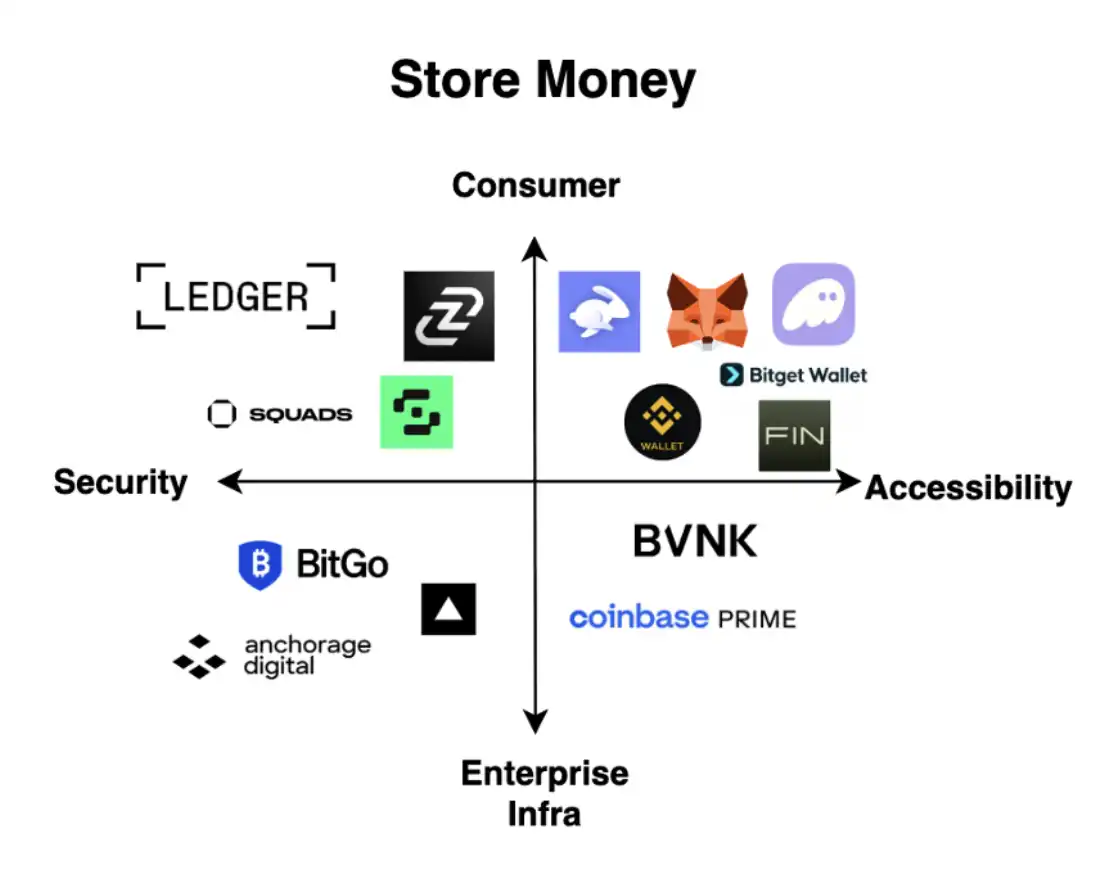
To truly achieve self-custody of crypto assets and interact with the blockchain, users must first own some form of a crypto wallet. Broadly speaking, the crypto wallet ecosystem can be divided along two axes: one being the axis of security ↔ usability, and the other being the axis of consumer-grade applications ↔ enterprise-grade infrastructure.
In different quadrants, differentiated winners with strong distribution capabilities have emerged:
- Ledger represents secure, consumer-facing hardware wallets;
- Fireblocks and Anchorage provide secure enterprise-grade wallet infrastructure;
- MetaMask, Phantom, Privy belong to consumer-oriented wallets focused on improving usability and user experience;
- Turnkey and Coinbase Prime occupy more of a "high-accessibility + enterprise-grade" infrastructure position.
Building a new bank with the wallet app as the beachhead has a core advantage: the wallet front-end — such as MetaMask and Phantom — often holds the entry layer for user interaction with crypto assets. The so-called "fat wallet thesis" argues that the wallet layer captures the majority of consumer-facing distribution capabilities and order flow, with a very high switching cost for end users to change wallets.
Indeed, approximately 35% of Solana's current transaction volume is completed through the Phantom wallet. This moat formed by excellent mobile experience and user stickiness is significant.
Furthermore, because consumers (especially retail) often value convenience over price, wallets like Phantom and MetaMask can have a fee of up to 0.85%; in contrast, decentralized exchange protocols like Uniswap may have a fee of as low as 0.3% for a single token swap.
However, solely relying on a single wallet platform to build a complete, profitable new-age bank proves to be unexpectedly challenging. This is because, to achieve scalable profitability, users must not only "hold" tokens but also frequently use these tokens within the wallet.
While Phantom, MetaMask, Ledger may already have widespread brand recognition, if users only treat their crypto wallets as a "cash box under the mattress," they can hardly be monetized. In other words, wallets must transform into active transaction and payment platforms to convert their distribution advantage into revenue.
MetaMask and Phantom are both clearly moving in this direction.
For instance, MetaMask recently introduced the MetaMask Card, aiming to enhance monetization on top of its existing crypto-native user base to become the default "spend crypto" solution. Phantom also closely followed by launching Phantom Cash, further entering the "grow money" field—by integrating Hyperliquid's builder codes to offer perpetual contract trading within the app.
As Blockworks puts it: "While Drift or Jupiter may be Solana's native darlings, real money has flowed to Hyperliquid."
For the entire wallet race, this is a universally significant experience: you must not only control the wallet itself but also control the scale of funds flowing inside and outside the wallet through actions like "spend, grow, borrow."
Spend Cryptocurrency
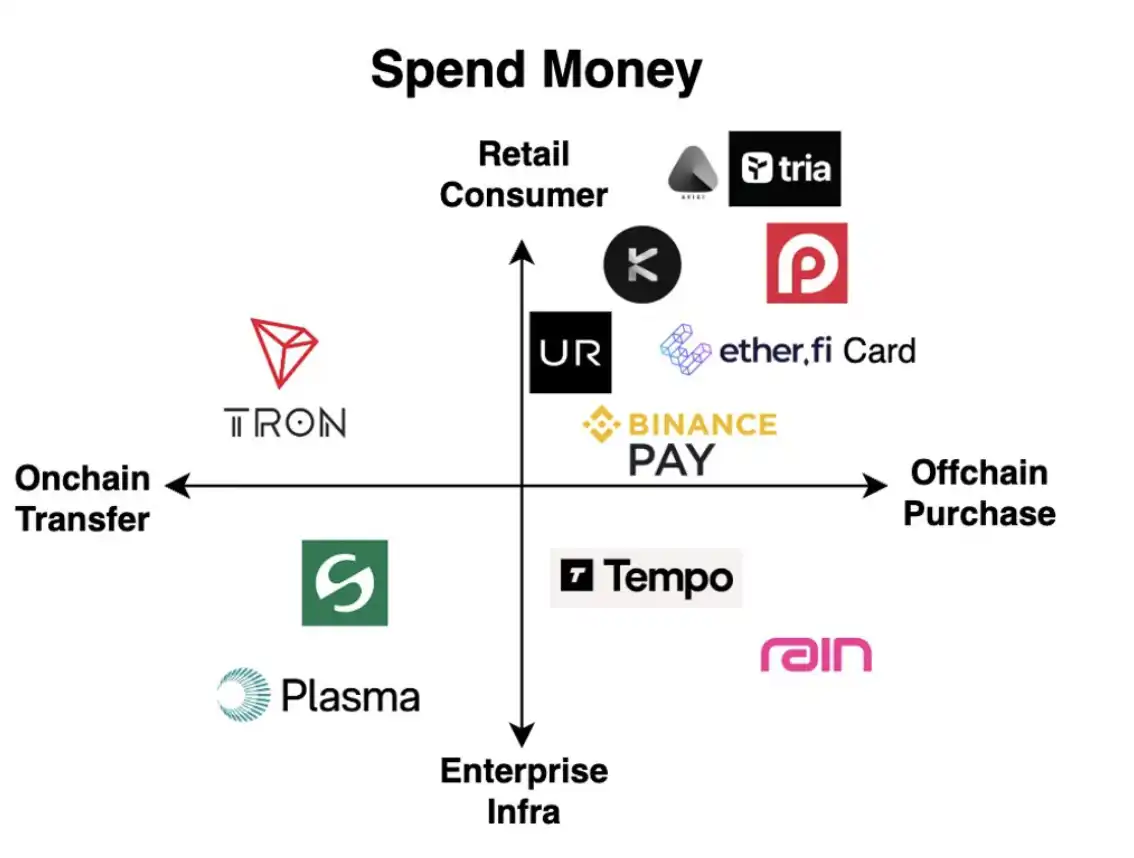
The second category of competitors for the crypto-native bank is platforms that enable users to spend cryptocurrency.
Similar to "Save Cryptocurrency," we can also categorize applications of "Spend Cryptocurrency" along two dimensions: from on-chain transfers to off-chain consumption (e.g., buying a cup of coffee); and from consumer-facing applications to enterprise infrastructure.
Interestingly, many of the "neo-bank" projects that have gained market attention in the past few months have almost all targeted the "cryptocurrency payment" niche. Market enthusiasm has been particularly concentrated in two main directions:
Applications targeting retail consumers, integrating stablecoin cards, such as Kast, Tria, Tempo, Stable;
Enterprise-focused "stablecoin public chains" or "stablecoin infrastructure," such as Stable, Plasma, Tempo.
Retail End: Making Crypto Apps More Like Banks
The first category of "payment-type applications" targeting retail users is essentially at the user experience level, making crypto apps more and more similar to traditional banks or fintech neo-banks: familiar interface labels such as "Home, Banking, Card, Invest" are all there.
With the maturation of crypto card issuers like Rain, Reap, and the expansion of Visa and Mastercard's support for stablecoins, crypto cards themselves have gradually become commoditized. True differentiation lies not in simply "issuing a card" but in whether they can sustain and retain transaction volume—whether through innovative cashback mechanisms, local on-the-ground promotional capabilities, or bringing non-native crypto users onto the platform.
This trajectory closely resembles the rise of fintech neo-banks: success is never just about "issuing cards" or "building an app" but about capturing a specific user segment, from students (SoFi) to low-income families (Chime) to international travelers (Wise and Revolut), and building trust, loyalty, and scalable transaction volume on that foundation.
If the path is correct, these "payment-first" crypto neo-banks could potentially become a crucial entry point driving mass adoption of blockchain infrastructure.
Furthermore, crypto neo-banks could also lead users towards a new generation payment system beyond the traditional banking card rails.
Card-based spending may just be a transitional phase—it still relies on Visa and Mastercard's settlement networks and inherits centralization constraints. New signals have emerged: for example, Bitget Wallet has conducted stablecoin QR code payment pilots in Indonesia, Brazil, and Vietnam. This points to a potential future: a crypto-native settlement system that could completely bypass traditional card issuers.
Enterprise End: Stablecoin Infrastructure and "Stablecoin Chain"
The second type of recently emerged "neobank" applications tailored for enterprises is stablecoin infrastructure projects, including Stable, Plasma, Tempo, Arc, etc., often referred to as the "stablecoin chain."
The key context for their rise is the demand from institutional players—traditional banks, fintech companies like Stripe, and existing payment networks—for more efficient fund flows.
These "stablecoin chains" often share similar characteristics:
They use a stablecoin as the Gas token to avoid cost instability due to price fluctuations of custom Gas tokens.
They employ a streamlined consensus mechanism to accelerate high-frequency, large-value transfers from A to B.
They enhance transfer privacy through a trusted execution environment (TEE).
They have custom data fields to align with international payment standards like ISO 20022.
However, mere technical improvements do not guarantee adoption.
For payment-focused public chains, the real moat is merchants. The key question is how many merchants and enterprises are willing to migrate their business to a particular chain.
For example, Tempo seeks to leverage Stripe's vast merchant base and payment network to drive transaction volume and adoption [12], bringing in a new group of merchants into the crypto fold. Other chains, such as Plasma and Stable, aim to become a "first-class citizen" of Tether USDT, strengthening the role of stablecoins in inter-institutional circulation.
In this realm, the most inspiring case is Tron. It processes about 25–30% of the global stablecoin transaction volume.
Tron's rise is largely attributed to its advantage in emerging markets such as Nigeria, Argentina, Brazil, and Southeast Asia. With low fees, fast confirmations, and global coverage, Tron has become a common settlement layer for merchant payments, cross-border remittances, and USD-denominated savings accounts.
For all emerging payment-focused public chains, Tron is a formidable incumbent to reckon with. To challenge it, achieving a 10x improvement on top of an already "cheap, fast, global" infrastructure is necessary—and this often means focusing on merchant expansion and network scale rather than marginal technical optimizations.
Asset Appreciation Through Cryptographic Means
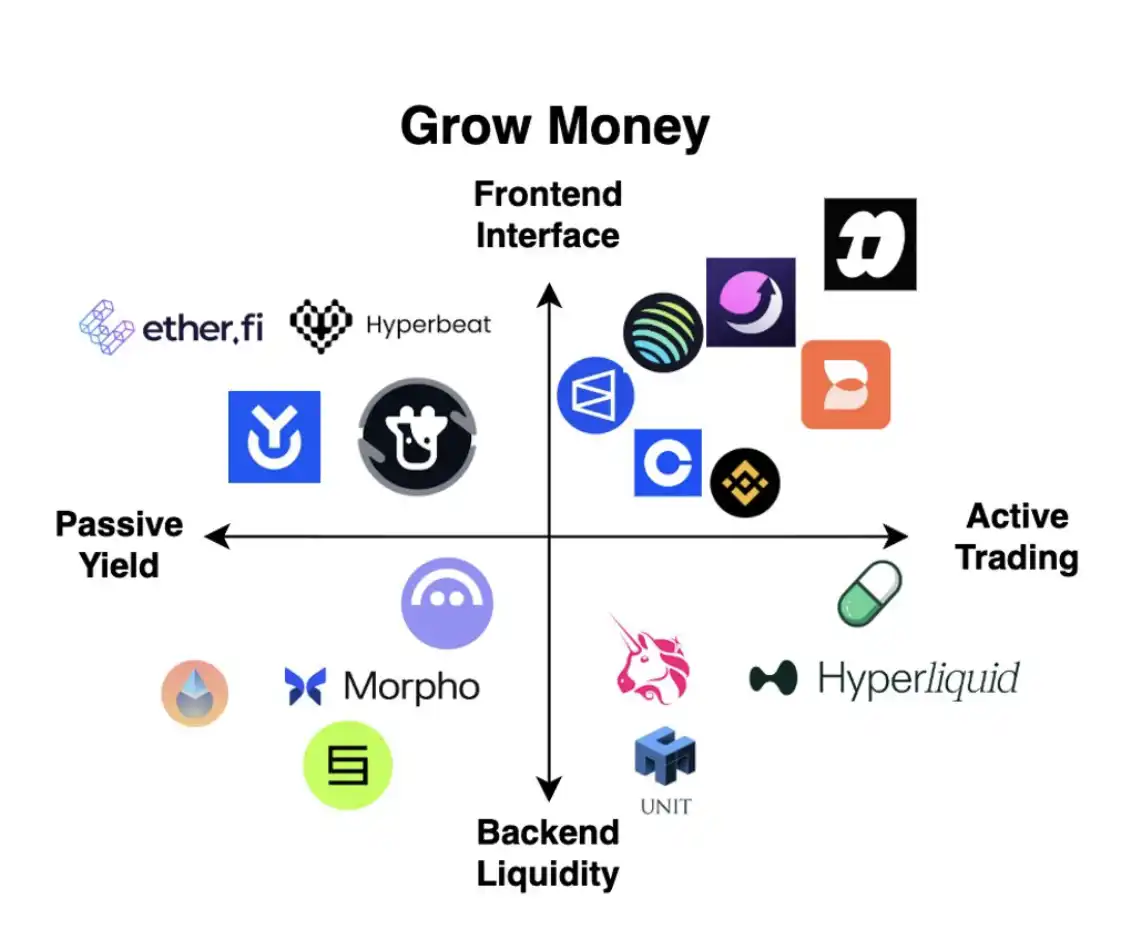
The "Crypto Neobank" establishes a third relationship with users, aimed at helping them grow their money. This is one of the most innovative sectors in the crypto field, giving rise to a variety of financial primitives from 0 to 1 — from staking vaults and perpetual contract trading to token launchpads and prediction markets. Similar to the previous section, we can classify "money growth" applications along two dimensions: from passive income to active trading, and from frontend interfaces to backend liquidity.
An example of a "money growth" application evolving into a full-fledged neobank comes from centralized cryptocurrency exchanges (CEX) like Binance or Coinbase. The exchanges initially offered a simple yet effective value proposition — "this is where you grow your wealth by trading crypto assets." As the trading volume continued to rise, exchanges gradually became not only a place for appreciation but also for asset custody and management.
Both Coinbase and Binance have introduced their own blockchains, wallets, institutional-grade products, and crypto cards, leveraging new products and network effects to monetize their core user base. For example, Binance Pay's adoption has been steadily increasing, with more and more merchants using it to accept crypto payments for everyday goods.
A similar trajectory has been validated in DeFi projects. Take EtherFi, for instance: it started as an Ethereum liquidity staking protocol, providing passive income to users re-staking ETH in EigenLayer. Subsequently, EtherFi launched a DeFi treasury called "Liquid," allocating user funds into the DeFi ecosystem to pursue higher returns under controlled risks. The project then expanded to EtherFi Cash — a groundbreaking credit card product allowing users to directly spend their EtherFi balance in the real world.
This expansion path closely mirrors that of fintech neobanks: entering through unique product angles (passive staking and earnings) to establish a foothold, creating the "best fit" solution in a niche area to scale, then horizontally expanding the product matrix to monetize and grow the existing user base (like EtherFi Card).
To date, the crypto space has seen several 0→1 innovations supporting user "money growth," such as perpetual contract platforms like Hyperliquid, which has become one of the most profitable crypto companies. Prediction markets like Polymarket are also gradually entering the mainstream view. It's highly likely that the next step for these platforms is similarly monetizing growth through new product forms — enabling users to save and spend more on the platform and leveraging network effects to amplify scale.
Starting with a "Capital Appreciation Platform," especially an active trading platform, has a significant advantage: high trading frequency and large trading volume. For example, Hyperliquid has processed a trading volume of $30 trillion in the past 18 months. Compared to a "Savings Platform" and a "Payment Platform," a "Capital Appreciation Platform" has a stronger user flywheel and stickiness, meaning they have a larger "captured user pool" that can be converted and appreciated in subsequent expansions.
However, at the same time, such platforms are highly dependent on market cycles and are often labeled as a "financial casino." This reputation may limit their reach to a truly global mainstream audience—after all, people's psychological expectations of a "bank" and a "casino" are fundamentally different.
Borrowing with Crypto
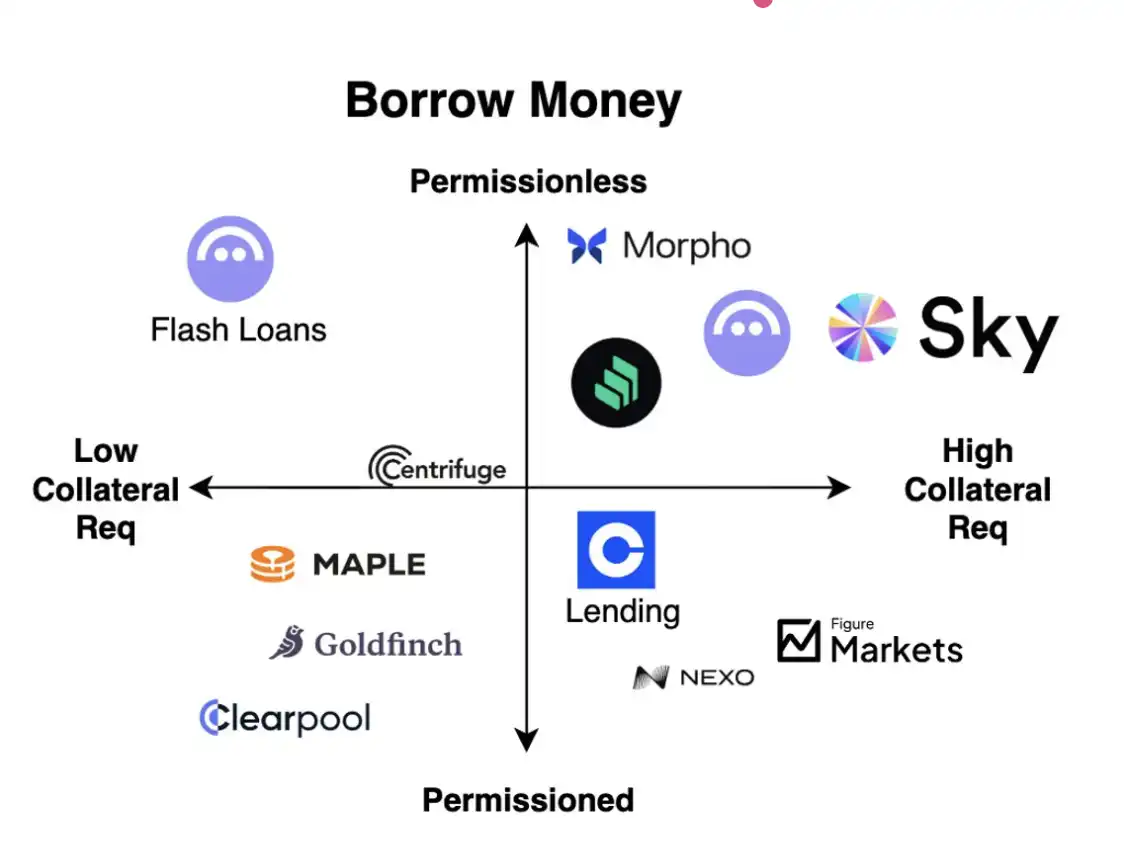
As in the traditional economic system, lending ability is a key engine that drives on-chain economic growth. For a crypto-native bank, lending is also one of the most critical and sustainable sources of revenue. In the traditional financial system, lending is a highly licensed activity that requires multiple reviews such as KYC, credit scoring, and lending history; whereas in the crypto world, the lending system exists in both permissioned and permissionless modes, corresponding to different collateral capital requirements.
The current mainstream model in the crypto space is a permissionless, on-chain operation, over-collateralized lending system. DeFi giants like Aave, Morpho, and Sky (formerly MakerDAO) embody the core spirit of crypto: "code is law." Because the blockchain inherently cannot access users' FICO credit scores or social reputation information, they can only ensure solvency through over-collateralization, sacrificing capital efficiency to gain broader accessibility and secure protection against default risk.
Among them, Morpho is seen as the next-generation evolution of this model. By introducing a more modular, permissionless system design and adopting a more granular risk pricing mechanism, it has increased capital efficiency while maintaining security.
On the other end of the spectrum is permissioned lending. With more and more institutional capital allocators entering DeFi through methods like market-making, this model is gradually gaining adoption. Protocols like Maple Finance, Goldfinch, and Clearpool mainly target institutional users and essentially build an "on-chain traditional credit counter." Through strict KYC and off-chain legal agreements, they enable institutional borrowers to obtain under-collateralized loans.
The moat of this type of protocol comes not only from liquidity (such as permissionless lending pools) but also from its compliance framework and B2B business expansion capabilities. Additionally, in the permissioned lending space, there are some projects — such as Figure Markets, Nexo, and Coinbase's lending products — mainly targeting retail borrowers, taking a compliance-first approach. They require borrowers to complete KYC, provide asset overcollateralization, and in some cases act as an underlying product "wrapped" on top of protocols like Morpho, as seen in Coinbase Lending. In these scenarios, the core appeal often lies in faster settlement times and fund availability compared to traditional bank loans.
However, the true "holy grail" of the crypto lending space is consumer-oriented non-overcollateralized credit — precisely the breakthrough that first-generation fintech products like SoFi and Chime excelled at, enabling them to reach the "unbanked" population. To date, the crypto industry has not made a substantial breakthrough in this area, failing to replicate the "consumer credit flywheel" established by fintech neobanks.
The fundamental reason is this: the crypto world lacks a robust, anti-Sybil attack identity system and sufficient real-world constraints against default. The only exception is "flash loans" — a form of instant, uncollateralized borrowing entirely born out of blockchain mechanics — but they primarily serve arbitrage bots and complex DeFi strategies, not everyday consumers.
For the next generation of crypto neobanks, the key to competition may lie in advancing toward this "middle ground": retaining the speed and transparency of permissionless DeFi while introducing the capital efficiency of traditional lending. The ultimate winner is likely to be a platform that can address decentralized identity issues or commodify them, thereby unlocking consumer credit and truly revamping the financial mechanism of the "credit card" in crypto. Until then, crypto neobanks may still heavily rely on overcollateralized lending as a core means to support DeFi yields.
Enabling Faster Capital Movement
At its core, the value proposition of crypto neobanks is to enable faster capital movement — much like what SoFi, Chime, and other fintech neobanks have achieved through mobile apps in the past decade. The blockchain realm fundamentally "flattens" the distance between any two accounts: value transfer is completed in one transaction, eliminating the need to hop through international banks, the SWIFT system, and numerous complex, outdated intermediary systems.
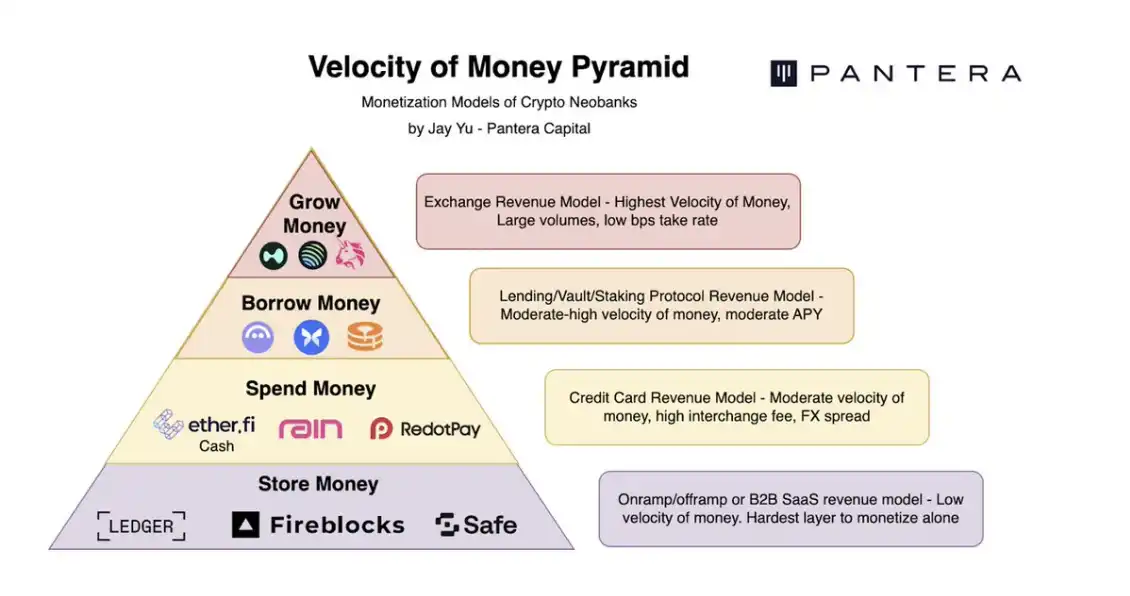
Despite the four types of financial relationships — saving, spending, growing, and borrowing — each leveraging the blockchain's "flattening effect" in different ways and corresponding to different trade-offs and monetization models, I believe they can ultimately be understood as a pyramid structure defined by the **velocity of money**.
At the top of the pyramid is money growth, with the highest money velocity (e.g., Hyperliquid's transaction fees); next is borrowing (monetized through interest); further down is spending (through fees and exchange rate differentials); and at the bottom is storage (mainly through deposit and withdrawal fees and B2B integration monetization).
From this perspective, the easiest path to building a crypto-native bank may be starting from the layers of money growth and borrowing — as these layers have the highest money flow rate and user engagement. Protocols that first capture "value in transit" can often subsequently expand downwards along the pyramid, gradually converting existing users into full-stack financial users.
Opportunities for the New Type of Bank
So, what might be the next step for a crypto-native bank? Where exactly is the opportunity space to build the next generation of permissionless banks?
I believe there are several (interrelated) directions worth further exploration:
1) Privacy and Compliance Parity
2) Real-World Composability
3) Full Utilization of Permissionlessness
4) Localization vs. Globalization
5) Non-Overcollateralized Lending and Consumer Credit
1 | Privacy and Compliance Parity
Stablecoins and crypto rails have significant advantages over the traditional financial system in terms of speed and usability. However, to truly compete head-on with fintech neobanks and legacy banking systems, a crypto-native bank must achieve functional parity in two key dimensions: privacy and compliance.
While privacy is not universally seen as a must-have in retail consumer scenarios, and stablecoins have achieved scale adoption in the absence of strong privacy protections, as more and more enterprise-level applications — such as payroll, supply chain financing, cross-border settlements — migrate to the blockchain, privacy becomes crucial. This is because the transparency of B2B transfers may leak business secrets and sensitive information. I believe this is one of the key reasons why many recently launched stablecoin chains emphasize privacy capabilities in their roadmap.
In turn, the new era of crypto banking also needs to consider how to achieve equivalence with its predecessors on a compliance level. This includes gradually building a global regulatory moat and licensing regime and proving to consumers and merchants that crypto solutions are no less compliant than traditional finance—perhaps leveraging new technological paths such as zero-knowledge proofs. Only by simultaneously addressing the two major issues of enterprise privacy and compliance trustworthiness can the new era of crypto banking truly achieve scale beyond its fintech predecessors.
2|Composability in the Real World
"Composability" is often seen as a core advantage of the crypto track—based on unified standards, frameworks, and smart contracts. However, in reality, this composability often remains limited within the crypto world: between DeFi primitives, yield protocols, and (mostly EVM) blockchains.
The truly challenging composability hurdle lies in how to bridge blockchain standards with legacy real-world standards: such as international banking systems like SWIFT, merchant POS systems, and standards like ISO 20022, as well as local payment networks like ACH and Pix. With the increasing adoption of crypto cards and the use of stablecoins in cross-border payments, positive progress has been made in this direction.
In addition, most current crypto card products still mainly serve crypto-native users, essentially serving as cash-out tools for "crypto whales." However, the real challenge facing the new era of crypto banks is to break through the crypto-native population, introduce an entirely new user base through real-world composability and genuinely innovative financial primitives. Platforms that solve the composability issue will significantly lead in the deposit and withdrawal experience, thus more efficiently supporting user scale.
3|Maximizing "Permissionlessness"
Fundamentally, the goal of the new era of crypto banking is to reshape a more efficient monetary standard: instant settlement, global liquidity, infinite programmability, and free from the bottleneck constraints of a single entity or government.
Today, anyone with a crypto wallet can transact, transfer, or earn income without the need for an intermediary in the fiat system. Crypto banks should fully leverage this permissionless nature to accelerate fund flows and build a more efficient financial system.
In the crypto track, global capital flows at internet speed, and its coordination mechanism is no longer administrative orders but incentives and games. The next generation of banks will leverage the permissionlessness of blockchain to allow new primitives such as perpetual contracts, prediction markets, staking, token issuance, to quickly combine with the existing financial track.
In economies with a high penetration of stablecoins, there may even be an opportunity to build a permissionless bank card network—a system similar to Visa or Mastercard but in the opposite direction: no longer converting stablecoins to fiat at the consumer end, but defaulting to on-chain settlement; to be compatible with traditional payment methods, fiat is then "tokenized" on-chain into stablecoins.
Furthermore, "permissionlessness" not only applies to human users but may also give rise to an agentic economy. For an AI agent, obtaining a crypto wallet is much easier than opening a bank account; with the help of stablecoins, an AI agent can autonomously engage in on-chain transactions with user authorization or predefined rules. The permissionless new type of bank is the underlying foundation and interaction interface of this "human-agent economy."
4 | Localization vs Globalization
The crypto new type of bank also faces a strategic decision: depth vs breadth.
Some may choose a path similar to Nubank, establishing a dominant position in a single region through deep localization, cultural alignment, and regulatory compliance before expanding outward; others may pursue a global-first strategy, launching permissionless products globally and doubling down in regions with the strongest network effects.
Both paths are valid: the former relies on local trust and distribution, while the latter relies on scale and composability. Stablecoins may serve as the "highway" for international payments, but the crypto new type of bank still needs "local exits" — deep integration with regional systems like Pix, UPI, Alipay, VietQR, etc., to achieve true local usability.
In particular, the crypto new type of bank has a unique opportunity to serve the "unbanked" population, providing dollar- or crypto-denominated capital access to regions with weak financial infrastructure or unstable local currencies. In the future, regional "super apps" and globally composable new types of banks may coexist in the long term.
5 | Undercollateralized Lending and Consumer Credit
Lastly, undercollateralized lending and consumer credit may be the true "holy grail" of the crypto new type of bank.
This issue encapsulates the aforementioned multiple challenges: it requires a robust, anti-Sybil identity system; it needs to bridge off-chain credit records with on-chain accounts; it must address the differences in credit models across regions and remain interoperable with traditional systems. Consequently, undercollateralized lending in DeFi is currently mainly focused on institutional private credit rather than consumer credit — although the latter is much larger in traditional finance.
Part of the answer may come from mechanism design innovation. Flash loans are a native form of uncollateralized lending catalyzed by blockchain characteristics. Similarly, smart revolving credit lines built around stablecoins and interest-bearing assets, real-time LTV management, automatic clearing buffers, and yield auto-repayment may gradually lower collateral requirements.
Once successful, on-chain consumer credit will significantly increase the velocity of money, provide a strong on-chain incentive for the unbanked population, and, similar to credit expansion in the real world, drive overall economic growth.
Epilogue
Just as the rise of FinTech neobanks reshaped the banking industry a decade ago, crypto neobanks are similarly seeking to redefine how we save, spend, earn, and borrow in the digital age. However, while FinTech neobanks mainly innovated on the front-end interface, crypto neobanks are attempting to upgrade the bank's backend itself — building a global, composable, censorship-resistant value transfer mechanism through stablecoins and public blockchains.
Therefore, a crypto neobank is not just an application interface but may be the gateway to a programmable financial system.
Of course, this journey is just beginning. Building a true "full-stack crypto neobank" involves more than launching a crypto card or a wallet protocol with a UI. It requires a clear target audience, rapid expansion along a product matrix, and establishing dominance in high-velocity fund flows.
If future crypto neobanks can continue to break through in areas such as privacy and compliance, real-world composability, permissionlessness, local and global strategies, and consumer credit, they have the potential to evolve from the edge entrance of digital assets into the default operating system of the global economy.
Just as the first generation neobanks used mobile internet to change the bank's "interface," this generation might use cryptographic technology to rewrite the underlying logic of money itself.
You may also like

Why does OKX want to start a new company with the parent company of the New York Stock Exchange?

The interim executive director of the Ethereum Foundation speaks out: What is our mission?

Standard Chartered Bank sings a 50x rhapsody again, aiming for AAVE to reach 3500 USD
Tidal Investment: We still have a positive outlook on the AI industry chain, but the reasons have changed

Former SpaceX engineer reconstructs the financial execution system using first principles

Why Is PAXG Price Different From Gold? 5 Reasons Crypto Traders Should Know

The cryptocurrency industry has entered the "Show Me" era: merely relying on vision is no longer enough

WEEX OpenAPI 101: 5 Powerful Modules, AI Trading Tools, and Grab Up to 70% Revenue Opportunities
Learn how WEEX OpenAPI connects traders, developers, AI agents, and trading platforms. Discover WEEX API features, Binance-compatible integration, automated trading workflows, revenue opportunities, and ecosystem possibilities.

Morning News | The draft amendment to the People's Bank of China Law aims to clarify the legal status of digital renminbi; South Korea will transfer about 40 unregistered virtual asset service providers to law enforcement agencies

Interpreting the Ethereum Foundation's new structure: Reaffirming self-sovereignty amid institutional trends

Interview with NDV Founder Jason Huang: Popping the AI Bubble and the Myth of Microstrategy, Seeking the Ultimate Ace in the Crypto Market
Morning Report | Former Ethereum Foundation researcher establishes Ethlabs; EU Parliament Economic Committee passes digital euro regulatory proposal

Dragonfly partner Haseeb: The fastest-growing companies in the future may all be stuck at 149 people

How xBubble Breaks the Deadlock in VC's Heavy Investment in the OPC Economy

The encrypted unicorn Blockstream is deeply embroiled in a serious fraud case

Morning Report | The South Korean Financial Services Commission plans to expand the regulatory sandbox to include virtual assets; the parent company of the New York Stock Exchange, ICE, has reached a partnership with OKX to jointly establish a cryptocu...

Exclusive Interview with Strategy CEO: Putting Aside the Sale of 32 BTC, the 60 Trillion AI Intelligence is the Ultimate Fate of Bitcoin

TRON revitalizes the image of the bull, creating a more approachable brand character
Why does OKX want to start a new company with the parent company of the New York Stock Exchange?
The interim executive director of the Ethereum Foundation speaks out: What is our mission?
Standard Chartered Bank sings a 50x rhapsody again, aiming for AAVE to reach 3500 USD
Tidal Investment: We still have a positive outlook on the AI industry chain, but the reasons have changed
Former SpaceX engineer reconstructs the financial execution system using first principles
Why Is PAXG Price Different From Gold? 5 Reasons Crypto Traders Should Know


