
x402 Protocol: The Internet Payment New Era at the Intersection of AI and Web3

Original Title: "x402 Protocol: The New Era of Internet Payments at the Intersection of AI and Web3"
Original Source: web3 Charmander
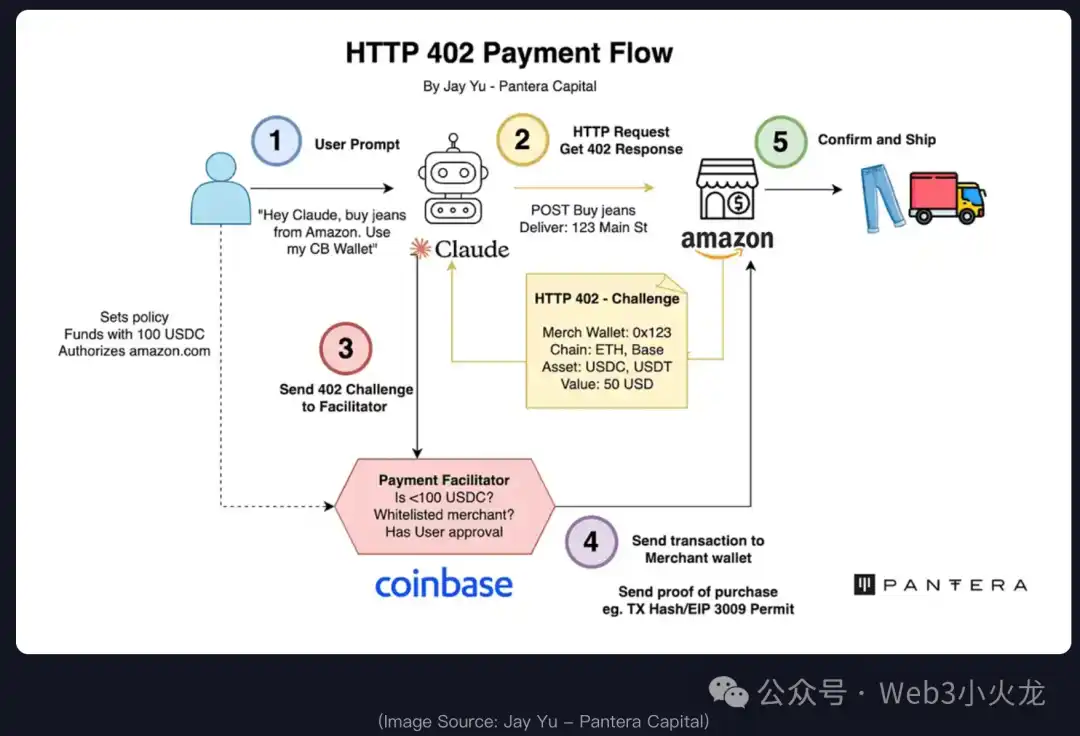
In 1994, an online sold CD marked the beginning of human e-commerce. Thirty years later, a pair of jeans autonomously purchased by AI is quietly ushering in the era of the machine economy.

As an AI agent autonomously completes a commercial transaction for the first time, the underlying logic of internet payments is undergoing a silent revolution. At the intersection of cryptocurrency and artificial intelligence, the x402 protocol has emerged, not only redefining the boundaries of payment but also laying the essential infrastructure for the autonomous machine economy.
From Dusty Protocol to the AI Economic Bedrock: The Technical Refactoring of x402
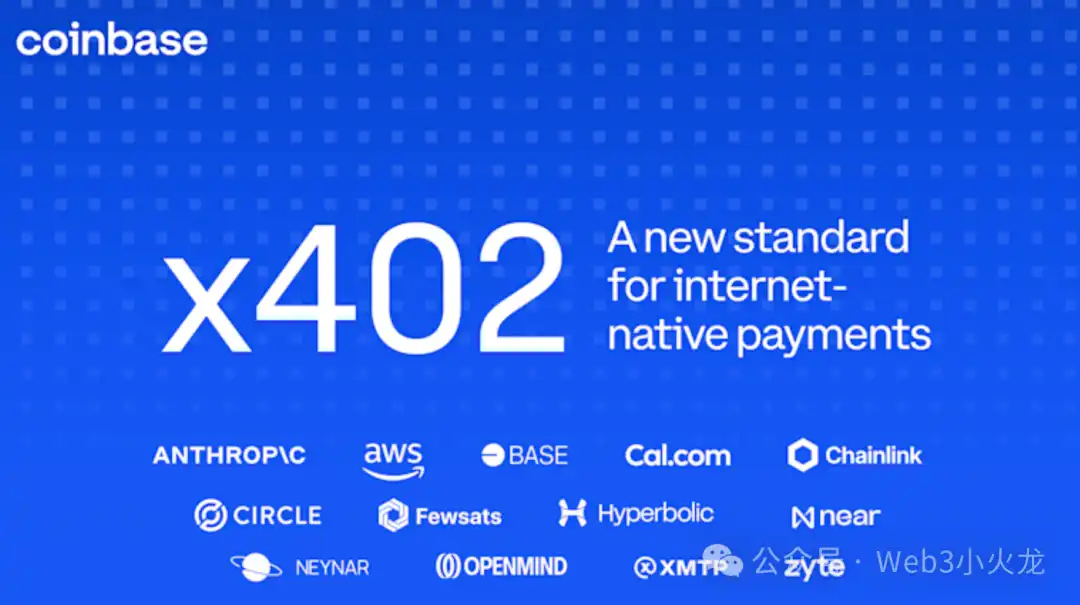
The HTTP 402 status code—"Payment Required," a code that has existed in internet foundational protocols since the 1990s but has long been idle, was reactivated by the Coinbase Developer Platform team in May 2025. The emergence of the x402 protocol addresses the most critical bottleneck of the AI economic era: value exchange between machines.
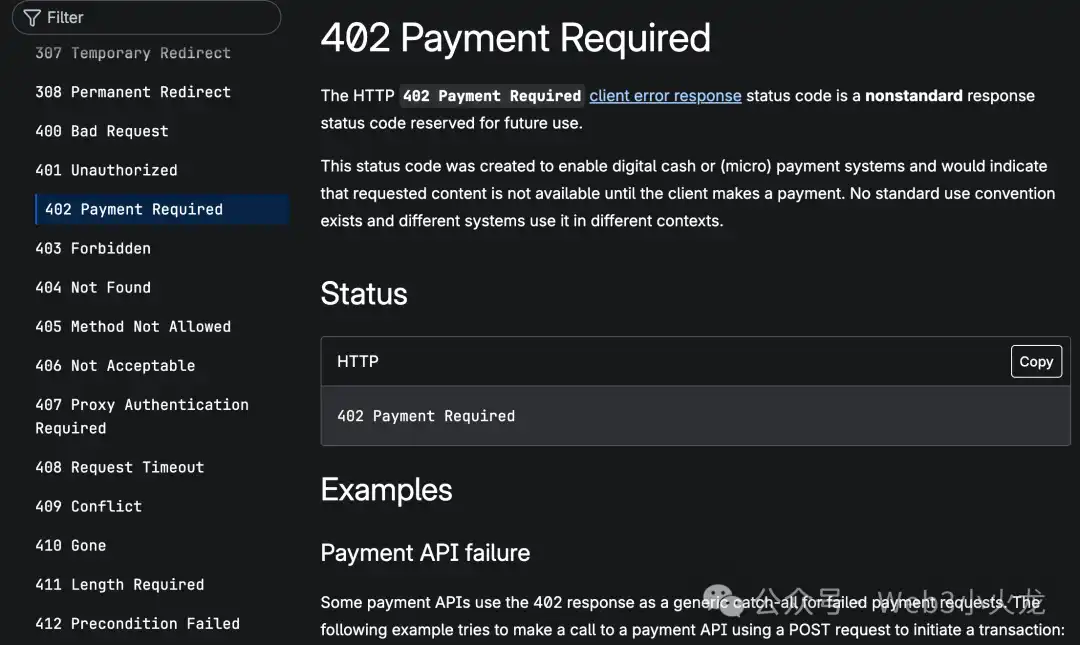
Source: https://developer.mozilla.org
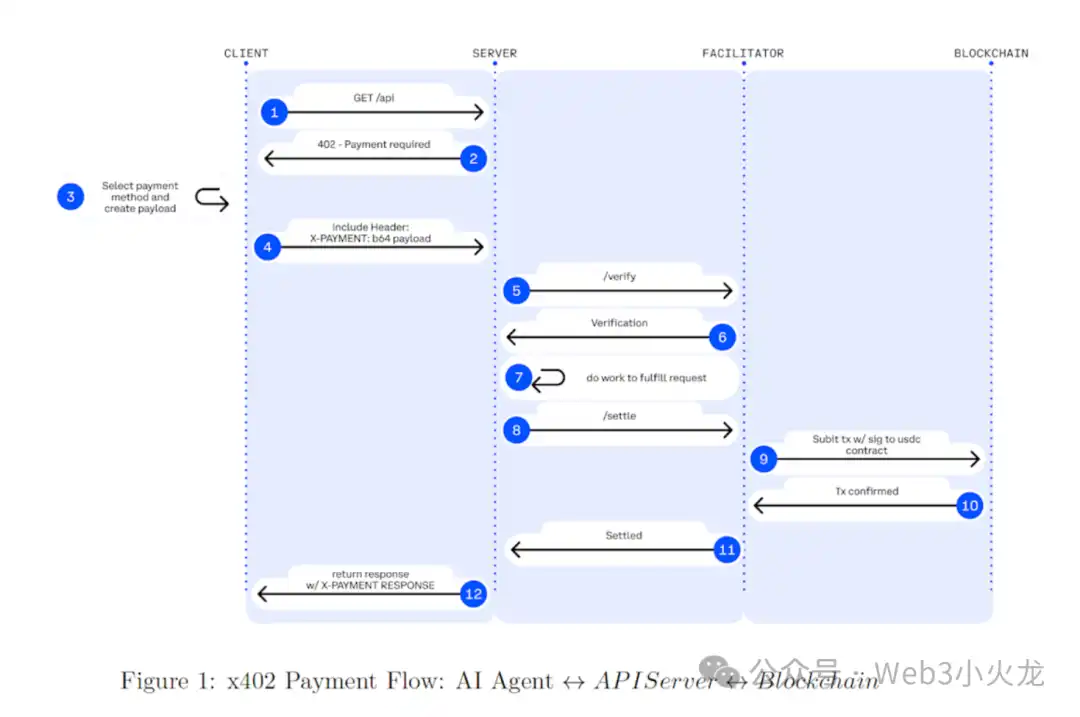
The core breakthrough of the protocol lies in abstracting payment into a machine-readable standardized interface. When an AI assistant needs to invoke a payment API or complete a transaction, it no longer relies on traditional human payment processes—such as registering an account, linking a bank card, or awaiting manual approval. Instead, through an HTTP request, it directly embeds payment instructions, utilizing stablecoins like USDC for instant settlement.
This technological architecture presents several advantages: Highly integrated to enable developers to quickly deploy payment functionalities; Blockchain-agnostic design supports various blockchain environments such as Base and Solana; Almost zero transaction fees make micro-payment scenarios viable, reducing settlement times to the 200-millisecond range.
Source: Coinbase
Ecosystem Explosion: From Concept Validation to Market Adoption
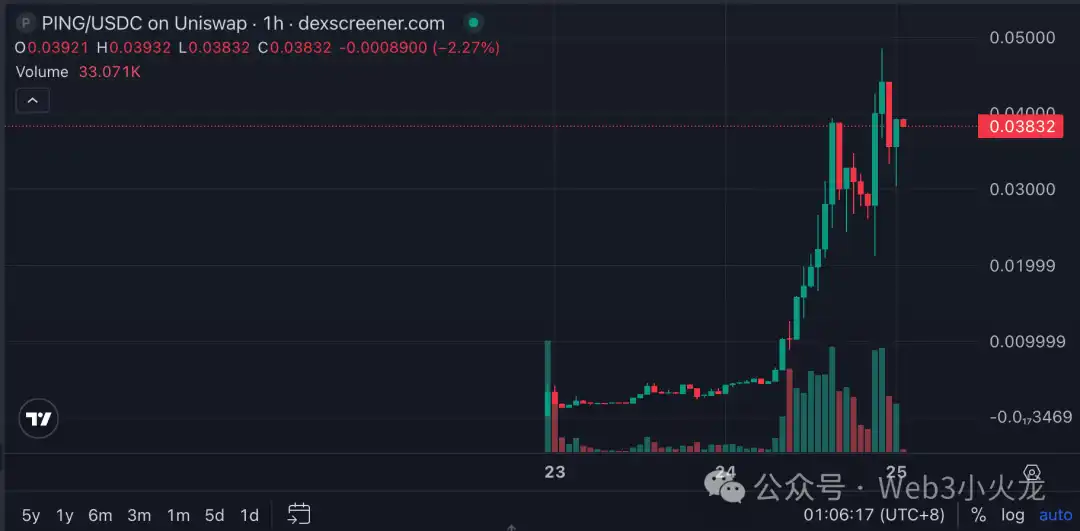
Market validation is often more convincing than the technology itself. The first token on Base Chain based on the x402 protocol, $PING, triggered a chain reaction across the entire ecosystem. Its minting mechanism is simple yet effective—users can mint 5000 $PING tokens by sending around 1 USDC to a specific address, and this low-barrier participation method quickly ignited market enthusiasm.
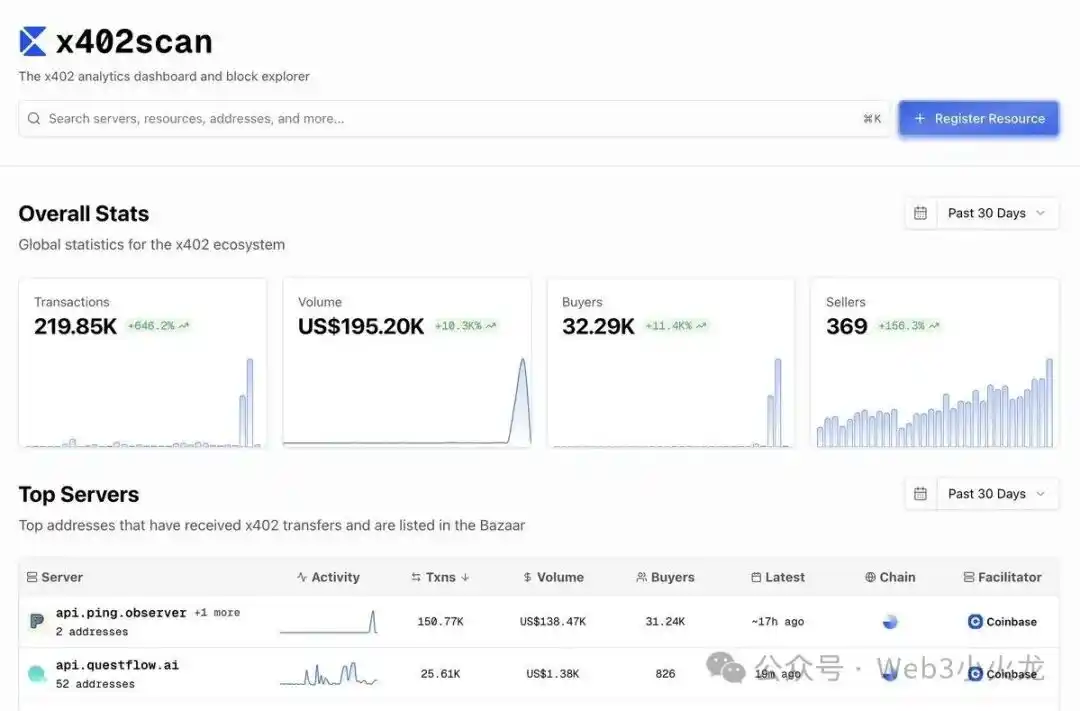
Data Tells the Story: $PING's market cap surged past $30 million in a short period, with a 24-hour increase of over 8x. More importantly, this provided a real stress test for the x402 protocol—within the past 7 days, the protocol's transaction volume skyrocketed by 701.7%, transaction value increased by 8,218.5%, and approximately 31,000 new addresses joined the ecosystem.
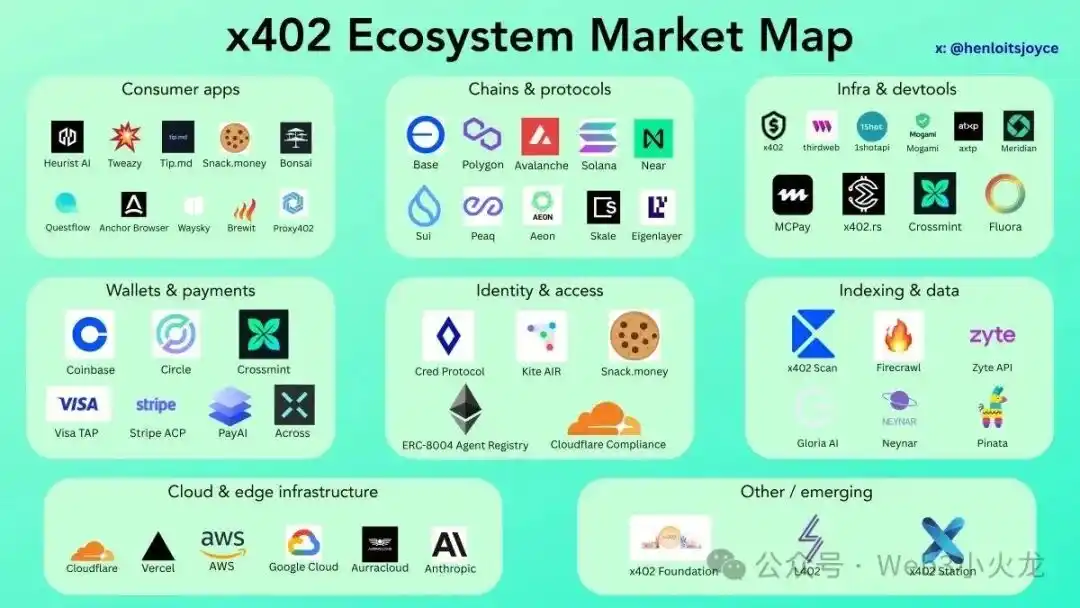
$PING's success is just the tip of the iceberg. The entire x402 ecosystem is rapidly expanding: the multi-AI-agent work ordering layer built by Questflow has secured a $6.5 million seed funding; PayAI provides cross-chain payment services support, including Solana; and the "smart web foundational transaction layer" developed by Kite AI raised $33 million in September this year, led by PayPal Ventures and General Catalyst.
Giant's Perspective: Why Infrastructure Builders are Betting Big
Ethereum Foundation's Strategic Positioning was clearly outlined at the ETHShanghai 2025 conference. Co-Executive Director Tomasz Stanczak unveiled the infrastructure blueprint for the future AI agent economy: ERC-8004 as the agent function standard, covering identity, reputation, and attestation verification; while x402 specifically defines the payment protocol between agents, collectively forming the technological foundation of the autonomous machine economy.

The underlying strategic intent of Coinbase as the initiator is equally clear. The x402 protocol's deep integration with the Base Chain places Coinbase at the core of the payment layer in the upcoming AI agent economy. As AI agents transition from passive tools to active economic participants, x402 is poised to become a key bridge connecting the traditional financial world with the crypto space.
The entry of traditional payment giant Visa is also intriguing. By incorporating x402 into its Trusted Agent Protocol framework, Visa not only addresses the security concerns of AI agent transactions but also effectively acknowledges the irreplaceability of crypto payments in the machine economy. This fusion of traditional finance with crypto infrastructure signifies x402's shift from edge innovation to mainstream adoption.

Challenges and Evolution Path: From Early Adoption to Ubiquity
Despite promising prospects, the x402 protocol's journey to mainstream adoption still faces substantial challenges. Merchant adoption is the first crucial hurdle—more businesses need to be incentivized to accept and integrate blockchain-based payment systems; regulatory compliance presents another major test—finding viable pathways amidst complex regulations across global jurisdictions; and user experience is equally critical—further reducing barriers to entry to enable even non-technical users to seamlessly participate.
However, these challenges are being gradually overcome. Ongoing investments from industry leaders like Coinbase, deep collaborations with infrastructure providers like Cloudflare, and a growing developer community collectively form the support network for the continuous evolution of the x402 protocol.
From a technological maturity curve perspective, x402 is at a critical juncture transitioning from the innovation trigger phase to the bubble expansion phase. Market exuberance may trigger short-term fluctuations, but in the long run, the core problem it addresses—autonomous value exchange between machines—will become increasingly vital with the expansion of the AI economy.
Conclusion: The Silent Revolution of Infrastructure
What the x402 protocol represents is not just an optimization of payment methods but a paradigm shift in the internet's value exchange layer. Only when transactions between machines become as seamless as data transfer will we truly enter the gateway to the next-generation internet economy.
History tells us that truly revolutionary infrastructure is often underestimated in its early days until it becomes an essential part of societal functioning. The electricity grid was like that, the Internet protocol was like that, and the x402 protocol is likely following a similar path. At the intersection of the AI and blockchain technological waves, a silent revolution that concerns the future economic landscape has already begun.
You may also like
Circle CEO responds to OUSD's challenge: Stablecoins are a winner-takes-all business, and we will not slow down
Argentina vs Cape Verde: When a Record-Breaking Legend Meets an Unbreakable Underdog
WEEX exclusive pre-match analysis of Argentina vs Cape Verde, exploring Messi-led Argentina’s dominance and Cape Verde’s historic defensive breakout, with a breakdown of volatility, structure, and match dynamics.
How does Gate redo "buying and selling stocks" from the cryptocurrency world to the stock market?
Former ByteDance employee's account: How I started with two Pinduoduo hard drives and made six times the profit with Seagate to achieve financial freedom?
Visa and Mastercard join 140 giants to launch a new stablecoin, but the impact on the market landscape may still be limited
WEEX Launches Depth Chart for Spot Trading
MiCA reshuffle begins, Binance temporarily bids farewell to the EU
Raising interest rates to protect STRC and selling coins to maintain credit, this time the strategy has chosen the two most expensive paths
Morning Report | Samsung announces a 265.5 trillion won investment plan, focusing on semiconductor and AI computing power data centers; Vitalik publishes an article detailing the entire technology tree behind the confusion protocol (iO) mainline
In the era of AI, what is left of Bitcoin?
NeoSoul announced plans to integrate with the OKX Agentic Wallet, promoting AI agents' participation in the on-chain economy
Why Is Bitcoin Lagging Stocks in 2026? AI Stocks, ETF Outflows, and the Nasdaq Rally Explained
What you bought on CEX is really not US stocks: Analyzing the 94% liquidation monopoly and the evaporation of equity under a five-layer pipeline
In such a crowded cross-border payment arena, where is the next stop for the future?
Why Is Bitcoin Down in 2026? What We Can Learn From 2022
The large models in the United States are moving towards closure in the name of security
From the white-haired stock god to the billionaire fund mogul, the smart people shorting Nvidia are all getting rich using the same framework
Morning Report | CoinEx becomes a key hub for Iran to evade sanctions, involving over $3.8 billion in funds; Kalshi seeks a new round of financing, with a valuation potentially rising to $40 billion
Circle CEO responds to OUSD's challenge: Stablecoins are a winner-takes-all business, and we will not slow down
Argentina vs Cape Verde: When a Record-Breaking Legend Meets an Unbreakable Underdog
WEEX exclusive pre-match analysis of Argentina vs Cape Verde, exploring Messi-led Argentina’s dominance and Cape Verde’s historic defensive breakout, with a breakdown of volatility, structure, and match dynamics.
How does Gate redo "buying and selling stocks" from the cryptocurrency world to the stock market?
Former ByteDance employee's account: How I started with two Pinduoduo hard drives and made six times the profit with Seagate to achieve financial freedom?
Visa and Mastercard join 140 giants to launch a new stablecoin, but the impact on the market landscape may still be limited
WEEX Launches Depth Chart for Spot Trading


